Nairobi Activist Misses Westgate Mall Violence by One Hour
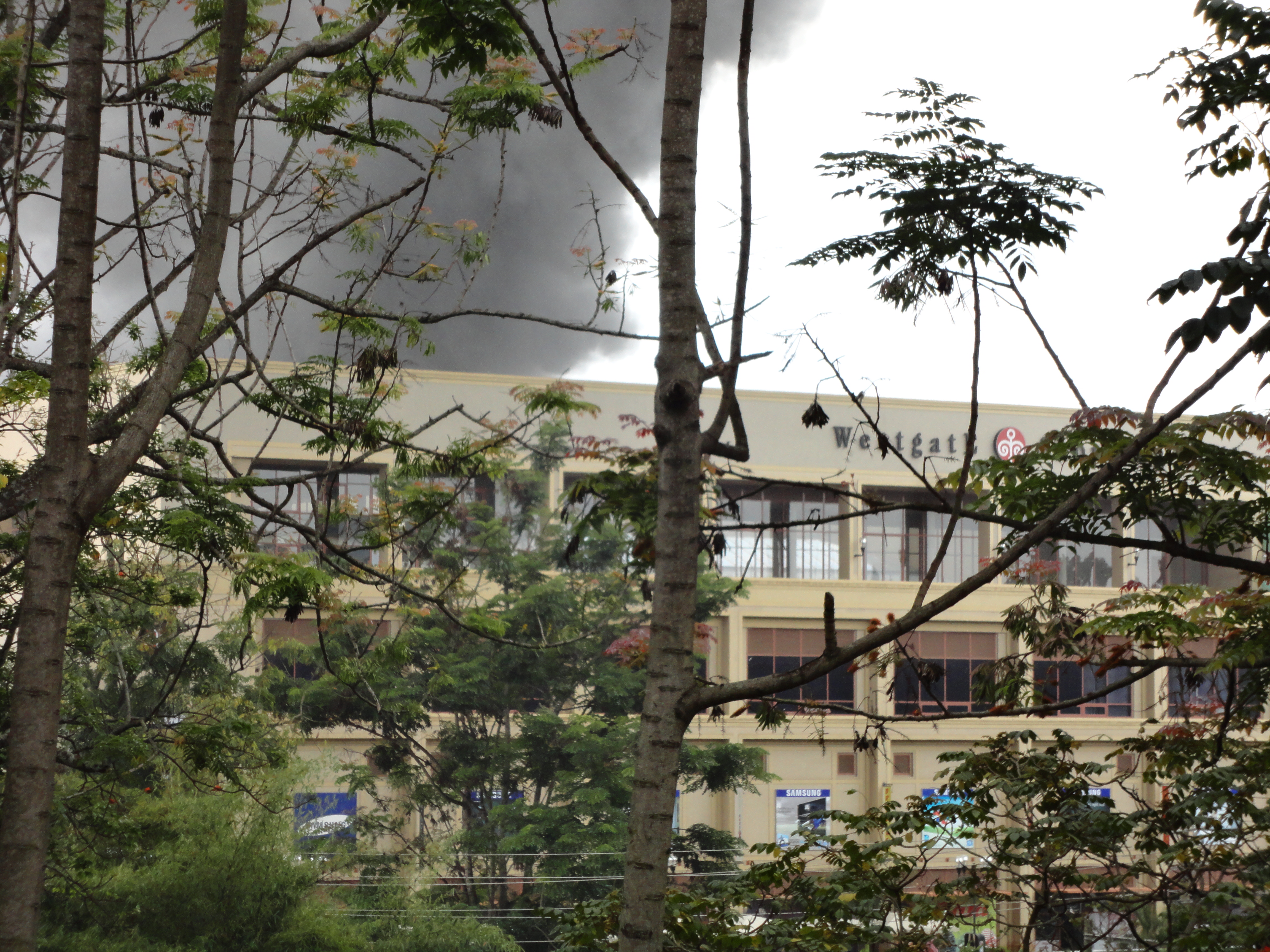
Photo by Doug Rori 9/23/13.
With the horror of the attack on people at Nairobi, Kenya’s Westgate Mall on Saturday, I was relieved to learn that Food Not Bombs activist and IndyMedia photographer Douglas Rori was not hurt. But when we called him to check on his safety, we learned just how close he came to being in the maylay. (More story below.)

By Doug Rori 9/23/13. Press line at Westgate Mall.
It turns out he was at Westgate Mall an hour before the shooting began, completing an errand my partner C.T. had sent him on! C.T. Butler, cofounder of the original Food Not Bombs collective, met Doug Rori at the IndyMedia Convergence in 2007. They’ve enjoyed a long distance, father-son relationship since then, with Doug initiating FNB work in Kenya, and C.T. sending donations from the United States.
Late Friday afternoon in Washington, DC, C.T. jumped up from a nap, remembering that he needed to rush to wire money needed that day for the transport cost of food for a group of kids.
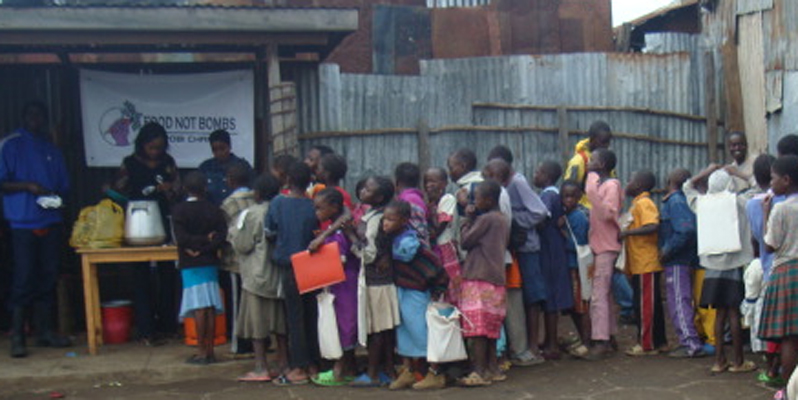
I’ve written before about Doug’s inventive program to feed kids living in Nairobi slums and AIDS orphans who live on the streets. If he held a public feeding as Food Not Bombs chapters in America do, he would likely have a food riot on his hands, the need is so great. The forceful would take the food for themselves, subjecting Doug and other FNB volunteers to violence and leaving nothing for the children.
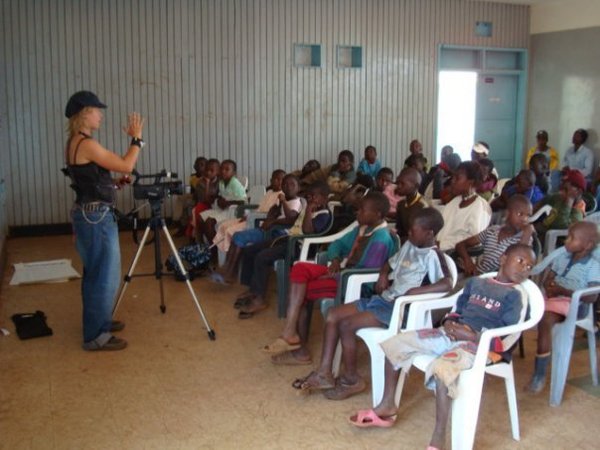
So instead of a public show, Doug advertises a free photojournalism class for kids. He conducts it in an enclosed courtyard or other location out of sight. The kids have a great time building skills and learning how to tell their stories. When it’s done, everyone eats a great meal.
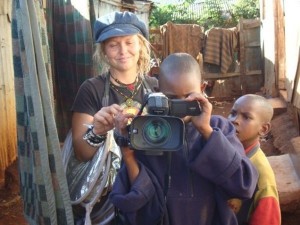
Learning filmmaking

Doug leading a workshop
Doug has established a couple of different locations for his enclosed workshops/feedings. And unlike American FNB members who can simply drive their food to the site of a feed, Doug has no car and has to be clandestine. He often has to hire taxis, at great expense, to deliver the hot food to the sites.


The donation C.T. had wired was to pay for the taxi. With C.T.’s call to alert him, Doug went to the Westgate Mall to pick up the wired money immediately. An hour after he left, the shooting started.
As a photojournalist for IndyMedia, Doug was interested to get as close as he safely could. The photos at the top are what he was able to send us. Stay safe, Doug! Send more when you can!
If you would like to donate to Doug’s project, visit:
http://awellfedworld.org/kenya
Subscribe to this blog's RSS feed
A Well-Fed Kenya: Food and Photojournalism
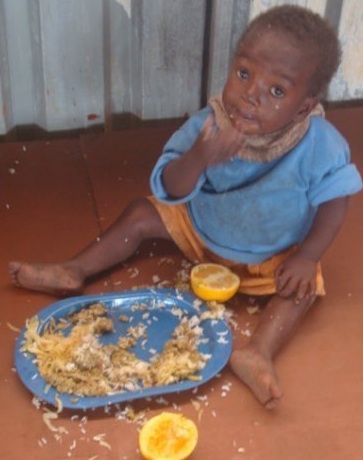 Some stories enter my bones and don’t leave. The story of Nairobi Food Not Bombs is in my marrow and vibrating, refusing to be ignored.
As C.T.’s partner, I’m a witness to the daily news feed of Food Not Bombs arrests and court cases, mostly here in the U.S. In addition, he gets a steady stream of calls all day, mostly people asking advice on consensus and also starting a Food Not Bombs.
One such FNB startup was germinated from C.T.’s trip to Nairobi, Kenya, in 2007. He was there to teach consensus at the IndyMedia Convergence, in advance of the World Social Forum.
IndyMedia is an amazing case study in do-it-yourself journalism, personal and collective empowerment. IMC “converges” at the site of each World Social Forum, a week or so before the WSF begins, to teach grassroots journalism to non-corporate press from all over the world.

IndyMedia Convergence, Dakar, Senegal, 2011
The convergences are temporary Intentional Communities that operate by consensus. Workshops teach would be journalists from Africa, South and Central America, Europe and the U.S. in street-level skills like building radios and transmitters out of materials available where they live.
At the Nairobi convergence, C.T. taught consensus and also pulled a hidden skill out of his hat—He taught IMC participants how to build a silkscreen press! This knowledge came from his early days of battling
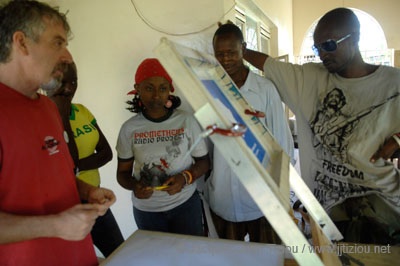
C.T. teaches IMC journalists how to build and use a 3-color silkscreen press to generate fliers, books, posters, t-shirts, etc.
Seabrook Nuclear Power Plant, starting the first FNB collective, the start of ACTUP, etc.
The convergences are meetings of very different cultures. In Nairobi, C.T. was the “old guy.” While the Northerners (Europeans and Americans) gave him little rank and dismissed his efforts to teach, Africans sought him out and revered him as the elder in the group.
One such new friend erased C.T.’s name from a community chore chart and wrote his own in its place. “In my culture, elders do not do the dishes,” He said.
 Douglas Rori, a convergence participant who was local to Nairobi, was so taken by C.T.’s stories of Food Not Bombs that he started a Nairobi chapter.
A Totally Different Ballgame
But unlike the twentysomethings who start chapters in their Midwestern college towns or face up against the police in Tampa, Florida, Doug and his Nairobi compatriots couldn’t just show up in the town square or public park with a table and pots of yummy vegan soup.
That’s a recipe for a food riot.
The hunger issue is not a minority issue there. Public feedings such as FNB is famous for the world over would put Doug and other volunteers at physical risk. Plus, with their food stolen, they would not complete their goal of serving the large population of street kids, mostly orphaned in the AIDS epidemic.
Sewing in the IndyMedia Thread
This is where the story gets dramatic in order to prevent drama.

Learning photojournalism
Doug and other young Kenyan activists had the direct experience of how empowering it is to learn tools for telling personal and local stories; to be an alternative to the corporate press party line.
And they had learned filmmaking, photography and journalism in that way. Doug decided to disguise their feedings by offering journalism workshops to the homeless kids.
They chose enclosed courtyards and indoor spaces and spread the word about their workshops. As you can see by the photos, people of all ages came to learn.
And meals were included!

Doug leading a workshop
To keep this innovative project going, Doug has formed an NGO, A Well-Fed Kenya, in partnership with A Well-Fed World. This status enables him to operate and seeking funding on an ongoing basis.
Even with NGO status, life is still touch and go for Doug. An IndyMedia colleague was gunned down a few months ago in one of the ghettos, probably an assassination. Doug himself struggles to keep a roof over his own head as he does this important work.
To fund his project and stability for the coming months, we have collaborated with him on an Indiegogo campaign. Please
CLICK HERE TO VISIT OUR CAMPAIGN PAGE,
make whatever contribution you can, and tell your friends Doug’s amazing story! Let’s pull together to keep this project going in the ghettos of Nairobi!
 We are starting out with some popular perks from our previous Indiegogo campaign, Food Not Bombs t-shirts and copies of C.T.’s books, On Conflict and Consensus and Consensus for Cities.
Doug is also making contact with some fair trade crafts cooperatives and exporters in Nairobi who may be willing to donate some of their jewelry and other crafts as perks for the campaign. So watch for additional perks!!!
 How can you get involved? Certainly, donating whatever you can is a huge start. Are you willing to join our campaign team and use Indiegogo share tools and social media to spread the word? Reaching out to people who don’t already know me, C.T. or Doug Rori is a great help.
What ideas do you have for getting the word out about this impactful project?
If you’re in the D.C. region, C.T. and I can schedule a House Party with you. We can supply a slide show, talk about the project with friends you invite, and seek donations. Contact us at fiopa@consensus.net today to make arrangements!
Our main goals for now are to share this amazing story of risk, caring and daring and to get folks to visit our campaign page and donate. We must keep this work going!
When visiting the campaign site, do take the time to go through the photo gallery picture by picture. The interest of the kids in learning from Doug and his friends is amazing. You will understand from the numbers of people who attend that his offering is relevant and is making a difference.
What can you give today?

Owning Our Stories: Building a Silkscreen Press in Nairobi
 It’s always a good day when I wake up to surprise jpegs in my inbox. If you’ve kept up with Hippie Chick Diaries for any time, you know that photos are often the seeds of posts.
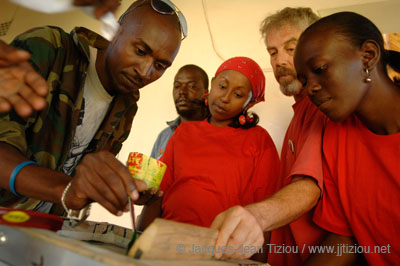
Here we see my partner, C.T. Butler, in Nairobi, Kenya, teaching a workshop in how to build a three color silkscreen press.
It was 2007 and C.T. was attending the IndyMedia Convergence in advance of the World Social Forum in Nairobi. When there’s a World Social Forum, 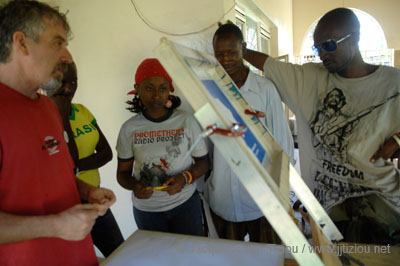 IndyMedia holds a convergence at the location, for a week or so before the event, teaching independent journalists and activists from around the world how to get their stories out using materials at hand. For example, workshops include building radios and transmitters from locally available materials.
When their training is done, the journalists and activists are a well-bonded collective that then covers the World Social Forum.
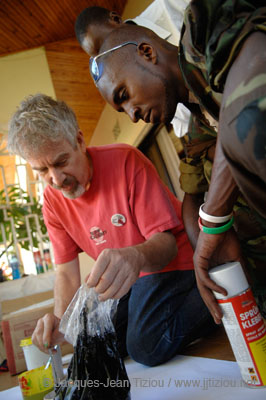
C.T. and Doug
C.T. attended the Nairobi convergence at the invitation of IndyMedia (aka IMC). C.T. is cofounder of the movement Food Not Bombs. The two groups have many cross connections and cross pollinations. Like Food Not Bombs before it, IndyMedia is leaderless, focused on local groups, horizontal in structure, consensus-based, etc.
C.T.’s primary focus was teaching consensus to convergence participants, but his experience in the early days of both FNB and IMC taught him do-it-yourself skills like building a silkscreen press by hand. C.T. often built and used makeshift silkscreen presses in his activism on the east and west coasts of the US.
Activists used the silkscreens to make three color posters, fliers and t-shirts at low cost. Many people are walking around today in Food Not Bombs t-shirts screened by C.T.
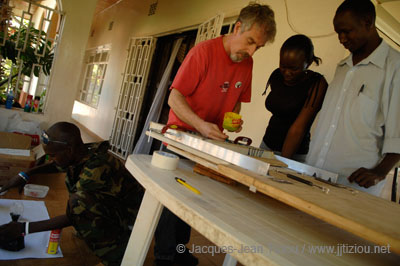 But when C.T. tried to teach this DIY information-sharing tool with activists in Kenya, it was not so easy. Several cultural differences got in the way. First, The most of the African students had not ever held tools like screwdrivers and hammers. Not a universal part of the upbringing.
Second, there was no Home Depot to go and buy all the supplies and tools. Instead, Nairobi marketplaces had little shops that specialized. There might be an entire shop for screws. That’s all they would have. New, used, mystery screws, chocolate screws, Martian screws…they would have it all, but C.T. found himself going to a dozen different shops,  sometimes more than once. Lumber was an odyssey unto itself.
I came into these photos because our friend Doug Rori, in the camouflage jacket, is working with us on a new Indiegogo campaign to fund his work with A Well-Fed Kenya. (More on A Well-Fed Kenya in upcoming posts!) I asked him for pictures of the two of them together, to help tell the story of our collaboration.
I love that what he found were pictures of the silkscreen workshop. C.T. had told me the story several times and it captures my imagination to realize the ways we can take our power back. If we can mass produce our own newspapers, t-shirts, posters, etc., with found materials, then we control our message, we own our stories. This is the profound power of the silkscreen press workshop, like all the others during the IndyMedia Convergence.
[Activists in Mexico made entire copies of C.T.'s book, Food Not Bombs: How to Feed the Hungry and Build Community, in Spanish, on a silkscreen press. His copy is one of his treasured possessions!]
The students and C.T. made a press that day. And today Doug and I will launch our Indiegogo campaign to get the message out about a really amazing, holistic project that feeds many people and teaches them the skills of getting their own messages out every day. Stay tuned!
Where Are We Going Next?
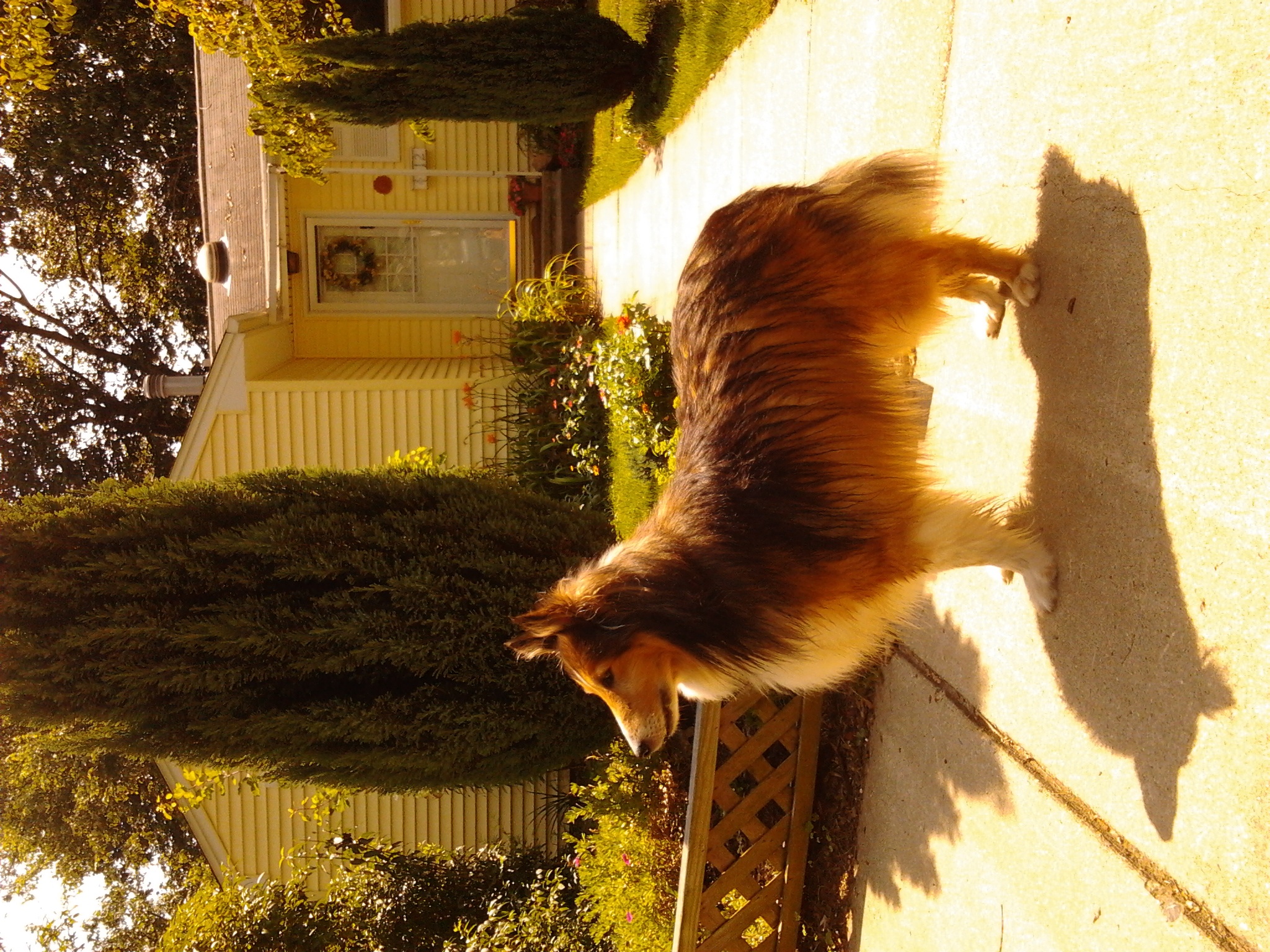
“It’s a dangerous business, going out your front door…
…you step onto the road, and if you don’t keep your feet, there’s no knowing where you might be swept off to.” — JRR Tolkien, The Lord of the Rings
Whew. These days are packed with emails, skypes, livestreams, and every possible electronic communication. Our cellphones ring and ring. There’s a request in every exchange. In between, C.T. and I talk and talk and talk about what’s coming next. What is coming next, you might ask?
Yeah, we don’t know.
The temptation looms large to just go back to New York, embed with OWS and get this consensus thing right. But the call of California hasn’t quieted. Lack of money limits our choices. Maybe we should just stay in DC and get jobs.
Conventional wisdom would ask, “What do you want?” But it isn’t that simple. We are the only people teaching what we’re teaching, Value-Based Consensus. So we can’t just tell people to get someone else to do it, nor can we quickly train other teachers.
Nor can we simply walk away from a direct democracy model which appears to be the one that truly does interrupt privilege and oppression and allow for all voices to be heard. It’s needed at this moment, more than ever.
Part of what we teach are paradigm shifts that support consensus, including a shift from, “What do I want?” to, “What’s best for the group?” The stakes are high. In this case, “the group” is the world, and particularly the activists who would battle economic injustice and climate change.
Strategically, we’d like to be writing books to help the teaching (and funding) go deeper. That’s a yet another direction.
These are baking days.
Tuesday, Wednesday & Thursday Nights: 3 Livestream Interviews with C.T. Butler
 TUES, WED & THURS nights at 8pm EDT (July 10-12, 2012):
Looking at my collection of Direct Democracy Tour camera phone shots, I am amused at how often I catch C.T. talking on the phone. My theory is that when he takes calls to consult on consensus process, I often see that as a break in our work and I whip out the phone for candid shots around whatever house we’re staying in. It’s getting to be some kind of photographic meme, however.
We have regular callers and one-timers. Regulars call from Occupy hot spots in the Bay Area, New York, Boston, Atlanta and Philly. Food Not Bombs activists call from Boston, Orlando and Nairobi.
Some of those calls are not activists asking how to deal with disruptors, but radio and podcast interviews. 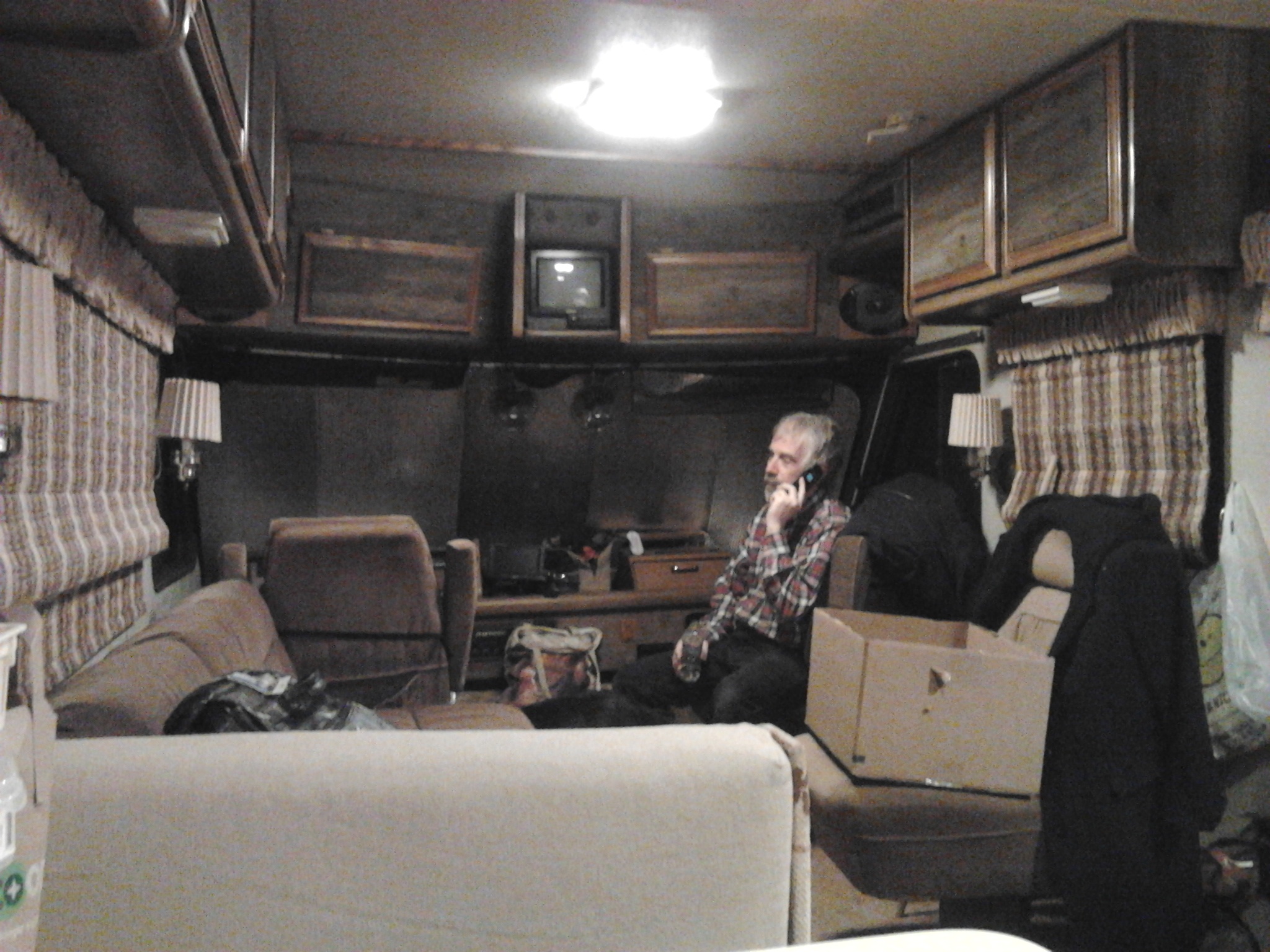 C.T. gives great radio through his four year old cellphone. Sometimes we trek into a studio for a face to face interview. This week, it’s Skype.
This week OPN, Other Possibilities Network, is doing a series of livestream interviews with C.T.. OPN host Mark (“Artister”) will break up the nights with the following topics. I know many of you know the resume details, but for those who don’t, here they are:
•Tuesday night the topic will be Overview and Observations from a Life in Activism. C.T. has been a central organizer of the post-Clamshell Coalition for Direct Action at Seabrook, Food Not Bombs, ACT UP, the Pledge of Resistance and more. C.T. has been to over five-hundred protests. He’s been arrested over fifty times in non-violent direct actions, and was beaten unconscious by police four times. Most recently he and I have been full time with the Occupy movement.
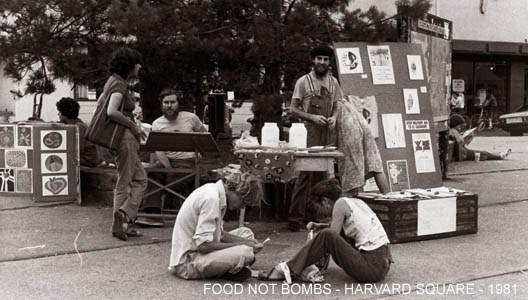 •Wednesday night will be a detailed discussion about the Food Not Bombs movement. C.T. and others from his Seabrook affinity group co-founded the first Food Not Bombs collective house and started the meme that has gone around the world. With Keith McHenry he is co-author of Food Not Bombs: How to Feed the Hungry and Build Community.
•Thursday night will be an in depth discussion on 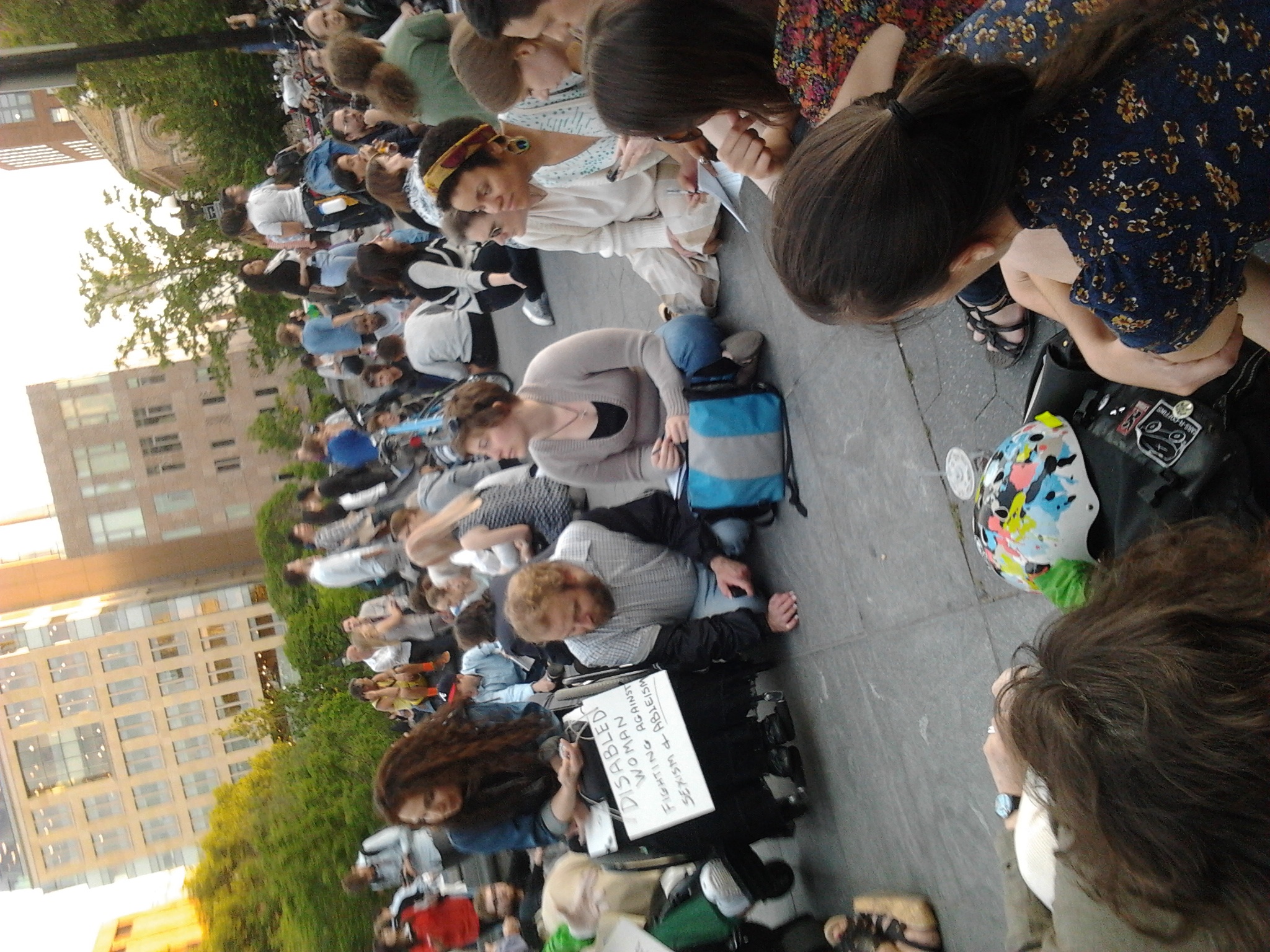 Value-Based Consensus Decisionmaking. As an activist and organizer, C.T. developed an interest in how groups can work together better. He has attended thousands of meetings, sometimes over one-thousand in a single year. 2012 is the twenty-fifth anniversary of his seminal work, On Conflict and Consensus, detailing how to practice Value-Based (formerly “formal”) consensus. C.T.’s latest book, Consensus for Cities, outlines how to use the affinity group/spokescouncil model to practice consensus in groups of up to one-hundred thousand or more. Since October, 2011, C.T. and I have been on our Direct Democracy Tour, offering workshops in consensus and organizing to Occupy groups.
All shows begin at 8pm EDT. Artister’s invitation: “Please join us for what is certain to be an informative and educational week!”
In our “back office” this week, we’re organizing a Consensus: Body and Soul workshop with the Black Cat Collective/Anarchist Bookstore in Dallas/Ft. Worth, Texas. If you’re in Texas or can get there this fall, and want to join in, contact me, Wren, at fiopa@consensus.net!
Also, we’ll be attending the Communities Conference at Twin Oaks in Louisa, Virginia. We’ll be presenting something but we haven’t visioned that yet. Twin Oaks organizers are keen to have an Occupy focus, and I know at least one Occupy activist who’s chompin’ at the bit to merge the Intentional Communities movement with Occupy. Since C.T. and I have been pointing out lately that Intentional Community is where we’ve seen consensus go the deepest, this merger isn’t a crazy idea. See you there Labor Day weekend, August 31 through September 3, 2012!
—WT
Please join our Hippie Chick Diaries fan page on facebook.
The Structural Engineer and the Colander
Like thousands of other people across America for the past six months, I have lived, breathed and oozed Occupy since it’s beginnings, dedicating my waking and sleepless moments to the beautiful, hopeful, flawed movement.
Most full-timers buried themselves in working groups and showed up for every next direct action of their local Occupy. My partner, Food Not Bombs cofounder and consensus trainer C.T. Butler, and I went from one Occupy to the next, sitting in on working groups and General Assemblies and offering countless workshops, large and small.
It could have and should have been hundreds of thousands or millions who were rolling up sleeves and joining us. They came to check out their local encampments, but something happened. The movement itself, not the government, disappeared them.
From our first day or two on McKeldin Square in Baltimore’s Inner Harbor, C.T. and I were concerned about the members of the 99% who would show up, wander around, read signs, maybe hold cardboard at traffic for a while, maybe talk to people, maybe attend that night’s General Assembly, but never hook up with the event, and after one or three nights, or three weeks at most, they were gone.
Over the course of our tour of fifteen Occupy encampments in November and December of 2011, I would repeatedly talk about the people the movement was bleeding out, as if through a colander. Those people numbered so many times more than the people who stayed, the remaining “activists” often shouting their GA’s into nonfunctional institutions.
By the time, I think early January, when C.T. Butler and I came home and did a two-day Consensus: Body and Soul workshop for our own Occupy of Baltimore, General Assembly attendance had gone from two hundred and more to twenty or thirty. And some stark demographics were visible.
What I mean to say is that, as people fell into and out of the movement, draining out of that colander, two archetypes of individuals remained, attending meetings and steering the actions of Occupy: First, those shouting people who love their own ideas and dominate meetings until people go along, and second, activists who wanted to find a way to incorporate the shouters’ agendas with their own desire that everyone just get along, and some memory of a desire that all voices be heard.
We came to call the two the cowboys (gender irrelevant) and the placators/enablers.
The heat of privilege and oppression had been so high in the structure that Occupy donned that all other personality types remembered that they had laundry to do and went home. Only the cowboys and their enablers could stand it.
And the enablers aren’t happy. They call C.T. and me almost daily still with requests that we help fix Occupy.
But the enablers’ target audience, the cowboys, have lofty ideas that they should figure out their own models/structures themselves, reinventing all wheels. They don’t want C.T.’s fingerprints on anything. “We shouldn’t pay some White guy…” They say, with no understanding that what we teach comes from the Iroquois through the Quakers through the feminist movement. Read a book, please! Also, am I invisible standing next to C.T.?
One woman, upset at C.T., said she would attend our workshop if I would teach it alone! But whether people like C.T.’s packaging, personality or gender identity, he’s the one with the knowledge the movement needs, not so much me.
He’s a sort of group dynamics structural engineer. In my experience, and I’ve been in this field a long time, there are maybe five people like C.T. alive on the planet right now. And I don’t know who or where the other four are. I’m saying something important.
—WT
Please join our Hippie Chick Diaries fan page on facebook!
C.T.’s DIY Book Process
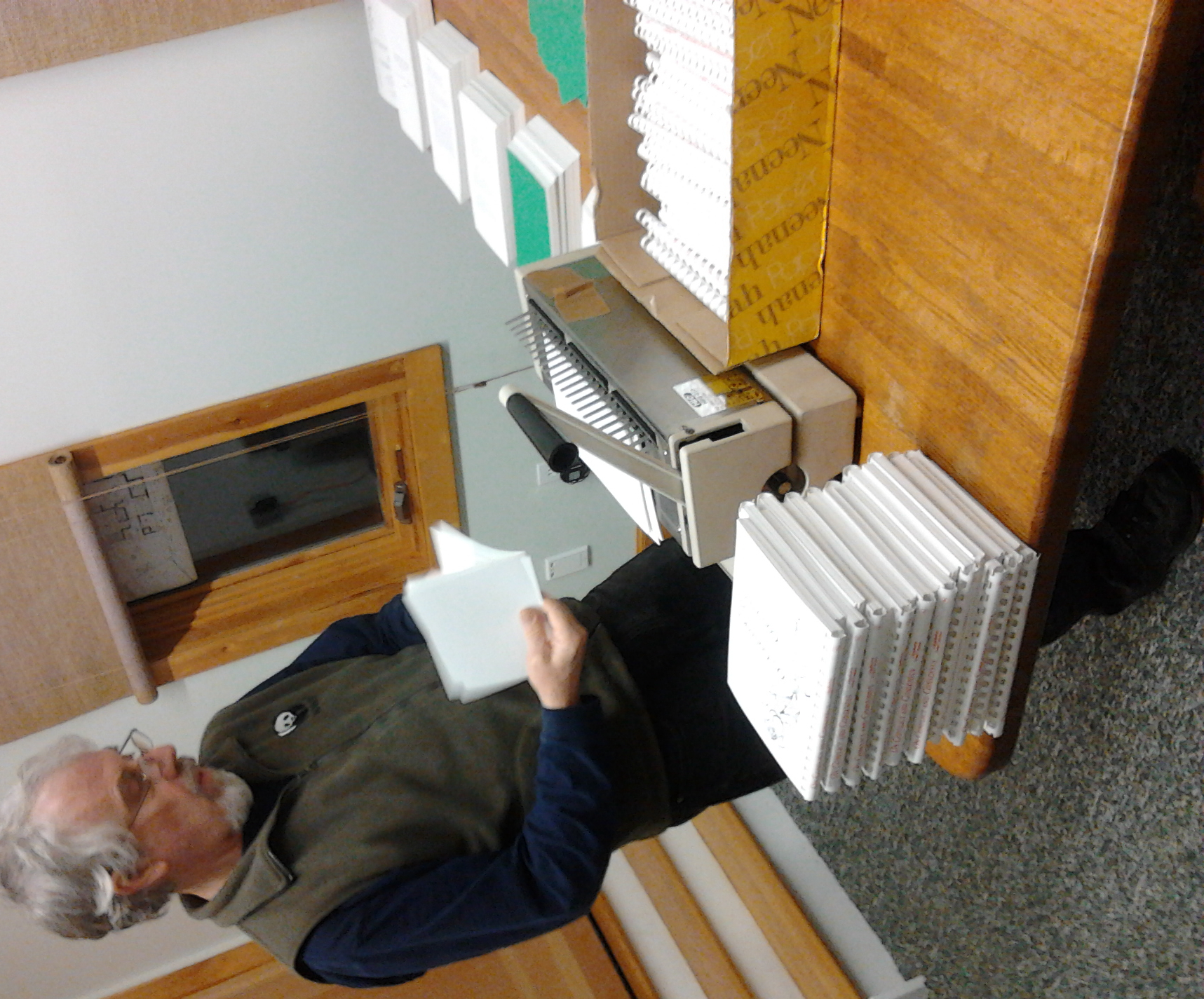 Many people wonder about the plastic binding of C.T.’s original book, On Conflict and Consensus. Originally a cost saving measure, C.T. has continued to order new printings with that spine because so many people have liked that feature, which allows them to easily lay the book open at meetings for quick reference.
What they probably don’t ever consider is that C.T., Mr. Do-it-yourself, binds each copy himself, using a binder he has lovingly maintained and repaired since the 1980’s!
The printer sends C.T. boxes with the book divided into sections, into which C.T. cuts holes with the machine. Then the machine stretches the plastic spine and the ordered sections are laid inside.
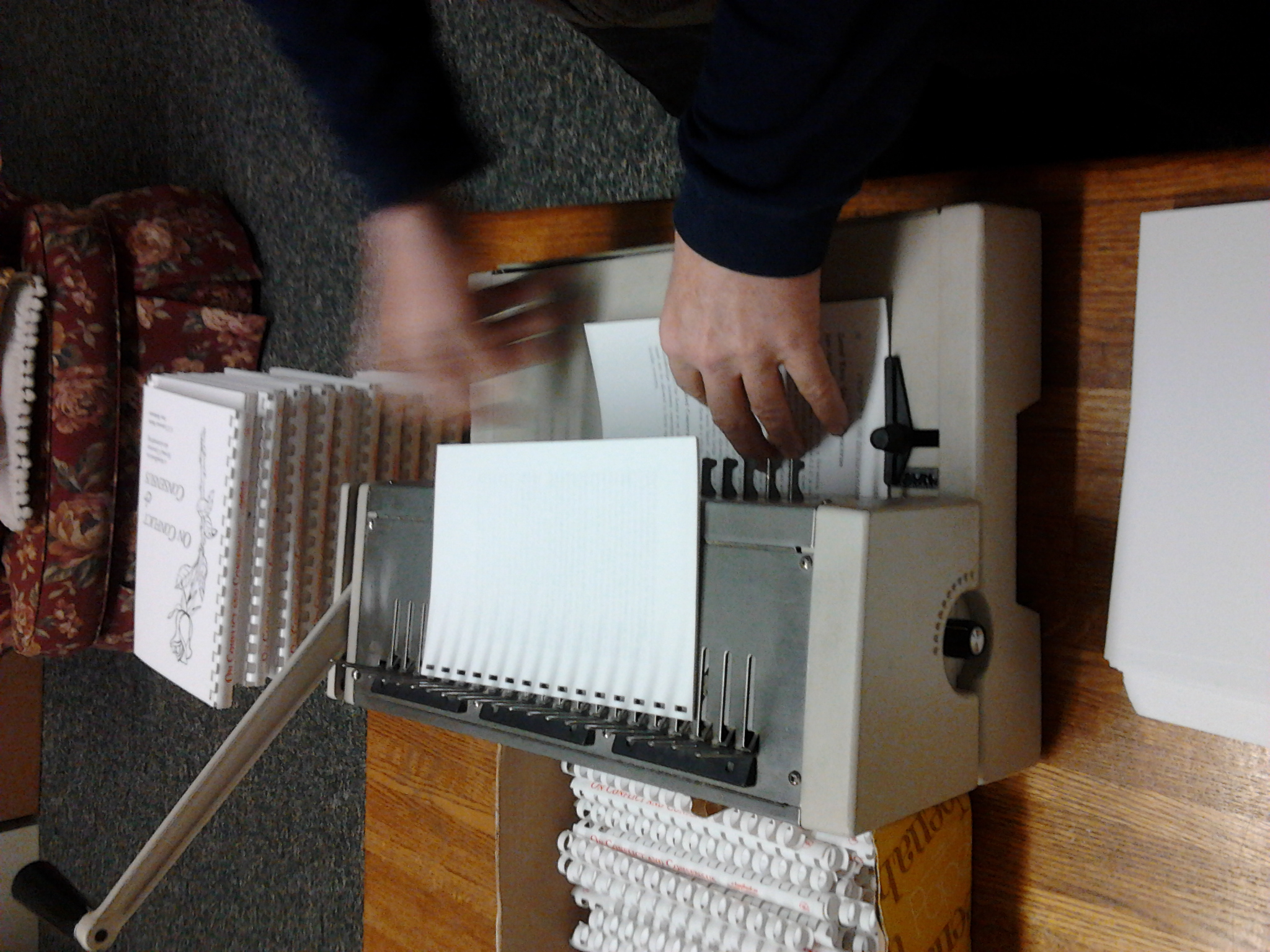 Each book takes a few minutes. And C.T. binds the copies in batches of two-hundred or so. Since its first publication in 1987, C.T. has sold well over ten-thousand copies, each of which he bound himself, spreading culture change by his own hands.
Through the years, he’s sometimes accepted help and shown others how to bind the books. But they usually didn’t bring the same mindfulness to the practice, and would often mess up the cutting or get the sections in the wrong order, ruining several copies. That made for a very costly learning curve, so C.T. prefers to carry on the practice himself.
On Conflict and Consensus and Consensus for Cities are made possible by investors who cover the cost of printing, and some of our costs of distributing the book. So when a book is ruined, we still need to pay back investors for that loss. The investors are one reason why we can’t give the books away, as we’re often asked to do.
His other books, Food Not Bombs: How to Feed the Hungry and Build Community and Consensus for Cities, are perfect bound. And when we go to place his titles on bookstore shelves, the proprietors complain about those plastic spines. They’re afraid they’ll break, rendering the stock unsellable. But we travel around, moving books from place to place, lugging them to events, and we have no problem.
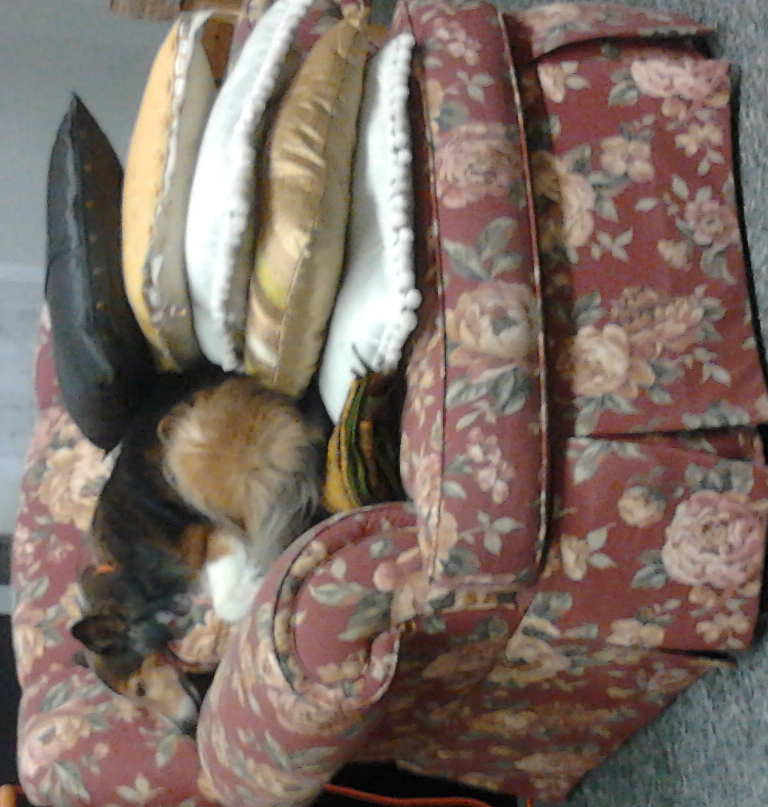 While we’re on the road, we’ve had to guess at how many books to bring. And C.T. brought the binding machine with us. These photos were taken at our friends’ house in Manorville, on Long Island, where we stayed for several weeks. Over several days, C.T. bound a couple hundred books while I organized our Consensus: Body and Soul workshop at WBAI. We had already hosted several Occupy activists from OWS, Philadelphia and Boston for a workshop in that very room.
Tuatha, of course, would spend his time enjoying every dog’s dream chair, waiting for us to stop working and kick the ball around!
—WT
Dragons Are Not Afraid of Thunder, or A Fine Time at the St. George Day Festival
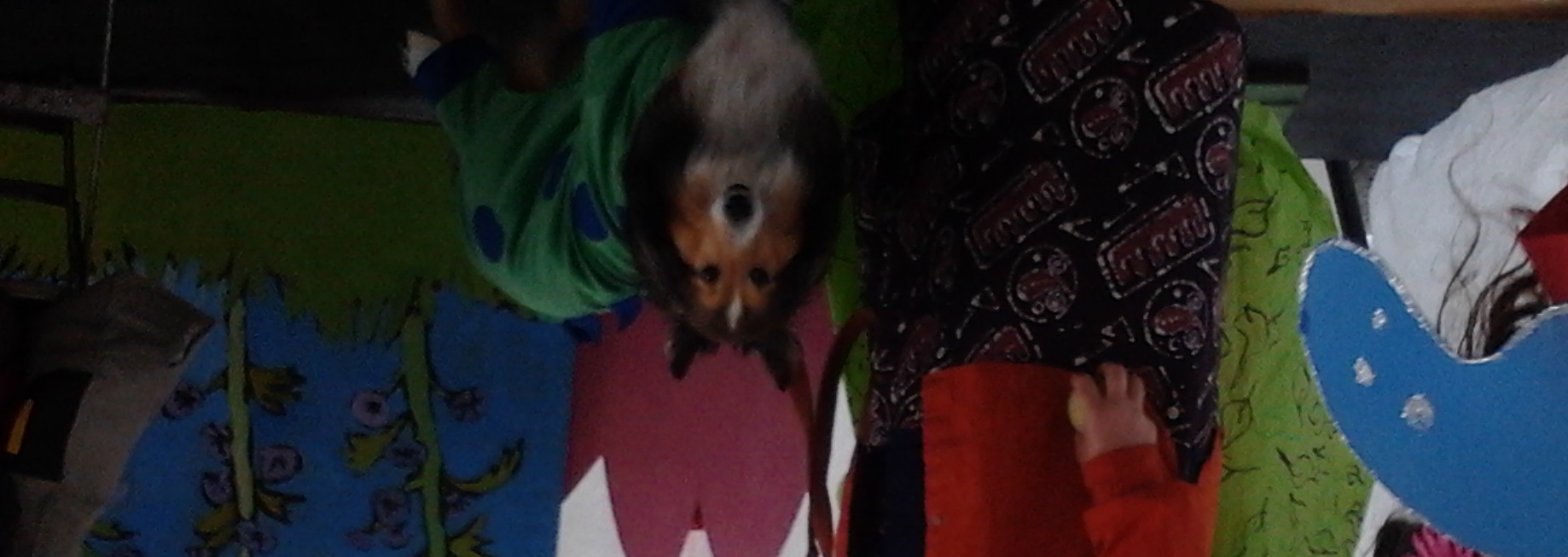
Tuatha, possibly disembodying, in the pet dragon contest
How do I end up in a pet dragon contest when I’m supposed to be coteaching a consensus workshop in Philadelphia? My life is like a road movie, just a string of random randomness.
Having postponed a workshop in Philadelphia, C.T. and I found ourselves with time to volunteer for and attend the St. George Day Festival here on Staten Island, our new home for a while. The event is organized by our friends at Every Thing Goes Book Cafe and Neighborhood Stage. The cafe is one of several businesses run by Ganas Community. We had been looking for time to plug in. So, with our schedule cleared and despite predictions of rain, plug we did.
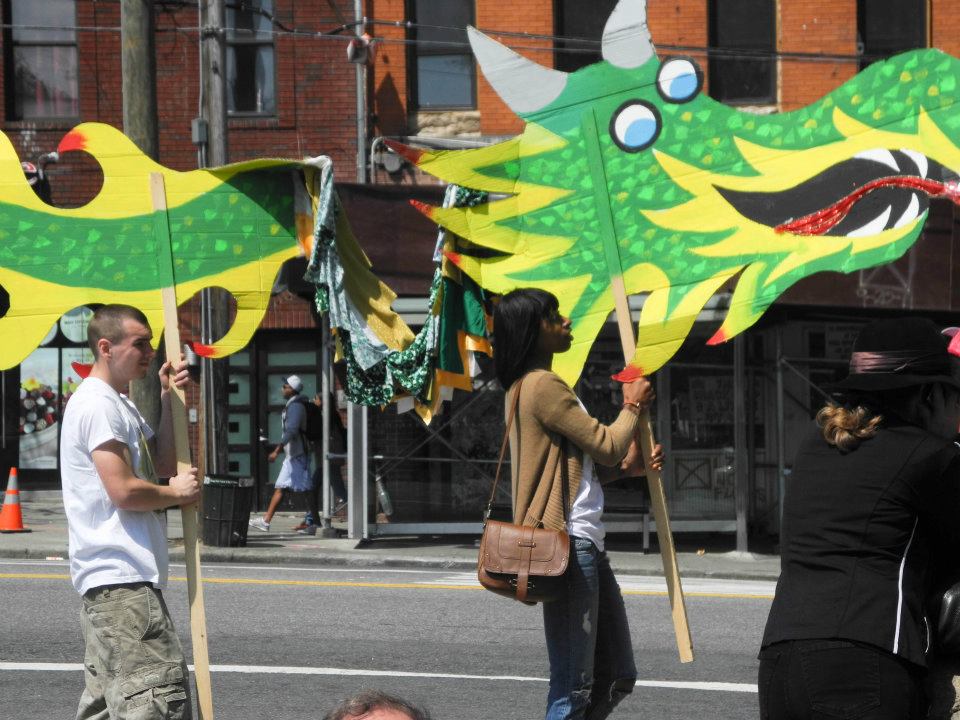 After our own battles with a printer dragon that wouldn’t give us the brochures we wanted, we hiked over to Ganas to help transport food. Once at the festival site, we were assigned the art project of reinforcing the bent fire and scales on a cardboard
  dragon for the parade. I can’t say that we improved it much, but the dragon did march and we enjoyed seeing our small work in the show.
We helped staff the local authors table. It was interesting to see the range of books and listen to the authors read. Our own books were a little out of place there. But soon we got an invitation from the Green Bus folks, who knew of C.T.’s work with Food Not Bombs. So our materials moved. C.T. had a great time swapping stories with activists from Occupy Wall Street, Occupy Staten Island, Food Not Bombs and more.
Around that time, we found out that there was to be a pet dragon contest. As it turns out, we have a pet dragon, at least part time, specifically when it thunders.
Our sheltie Tuatha is powerful afraid of storms. And fireworks…and any other stimulation that dogs of the ages have ever tried to fear. I saw the ads for the so called “thundershirts,” and I was intrigued but skeptical, especially because the marketing included lots of fake blogs pretending to be independent testimonials.
The ads/blogs implied that the science behind the thundershirt is that it presses on certain acupuncture points on the dog, calming and making her/him feel more secure. Well, that sounds reasonable, but I couldn’t quite justify the expense without knowing it would work on my particular paranoid pup.
That’s when I remembered that Tuatha has a huge collection of Halloween costumes. I knew right away that our favorite, the dragon, would fit snugly in the way that the thundershirts in the pictures do. I tried it the very next time it stormed.
It worked. I would like to tell you a story of false advertising and how they’re just stealing your money. Well, if you have a drawer full of doggie Halloween costumes, it might be the case that you don’t need to give the thundershirt people your money. Don’t ask me how it works. C.T. and I have this whole theory about “contingent behavior” that I won’t go into here.
But the short story is that C.T. went home and got our pet dragon in time for the contest. Because the start time was delayed repeatedly, Tuatha the dragon and I walked all around the festival. He was very popular. We got to meet another contestant, Shakespeare, and his humans who were waiting in the wings. I learned more pointers than I will ever be able to blog about how to win dog contests and where to find them. It turns out the competition was professional!
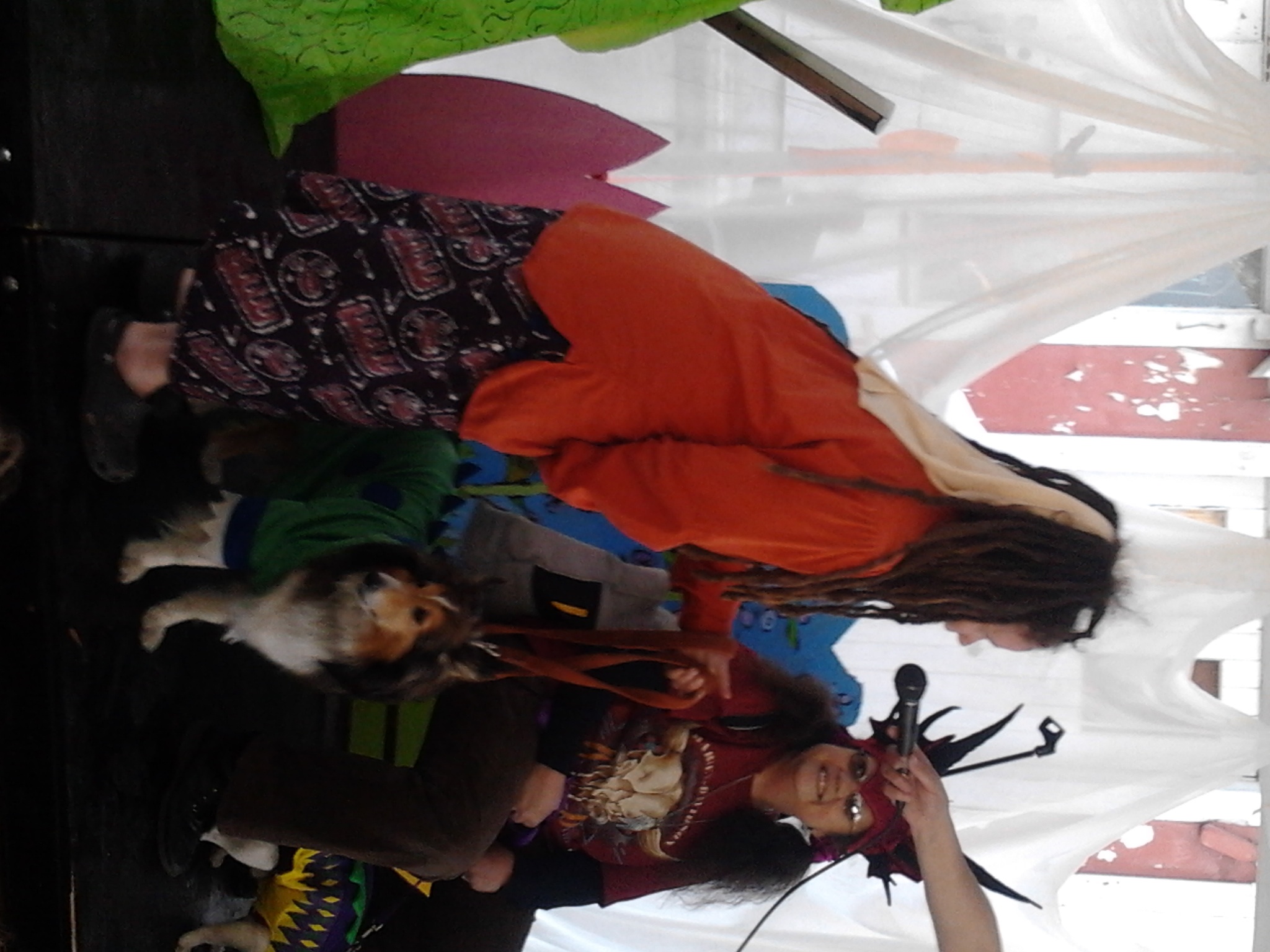 Well, this was only our second contest, the first being a parade in New Freedom, Pennsylvania. We found out about that one the day of. And now the pro’s had a leg up on us again! Shakespeare’s humans velcroed him into a much more elaborate dragon costume, one that didn’t look like he’d worn it for years of trick or treating, hours of playground wrestling and many episodes of thunder.
But, luck was on our side. It turned out that Shakespeare and Tuatha were the only entrants. And after applause voting (which I’m pretty sure went in Tuatha’s favor) the emcee declared a tie for first place! Fair enough. We got to win!
In other news of the day, we only sold one book but we met many interesting neighbors who would like to learn consensus. And we reconnected with old friends of Ganas Community. We took in interesting poetry and loads of fine local music. And the organizers fed the volunteers a wonderful spread, so we economized there. Very helpful in our line of work.
And we returned to our host’s home with bragging rights—We won the pet dragon contest. What? No state and nationals to follow? That suits Tuatha fine. He loves the idea of going with us when we leave home, but he’s not always thrilled at the places we go. Costumed crowds are no fetish of his.
—WT
Hippie Chick Diaries Porch Sale: June 10-12; June 24-26, 10am-2pm BENEFITS TOOLBOX CAMP SCHOLARSHIP FUND!
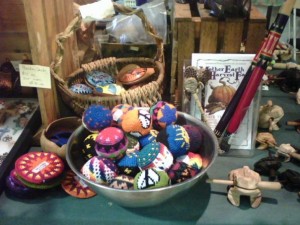 Buy a business or buy a necklace, I always say. Well, this is the first time I’ve said it and it’s not very witty, so I guess I won’t make a habit of repeating it. But those are your choices!
So many of my friends through Hippie Chick Diaries, Heathcote Community, Spoutwood Farm, Common Ground on the Hill, and other connections have come out to Heathcote Earthings’ many festivals and supported us. We’ve enjoyed our mission of bring handmade, fair trade goods of natural materials to the Mid-Atlantic region.
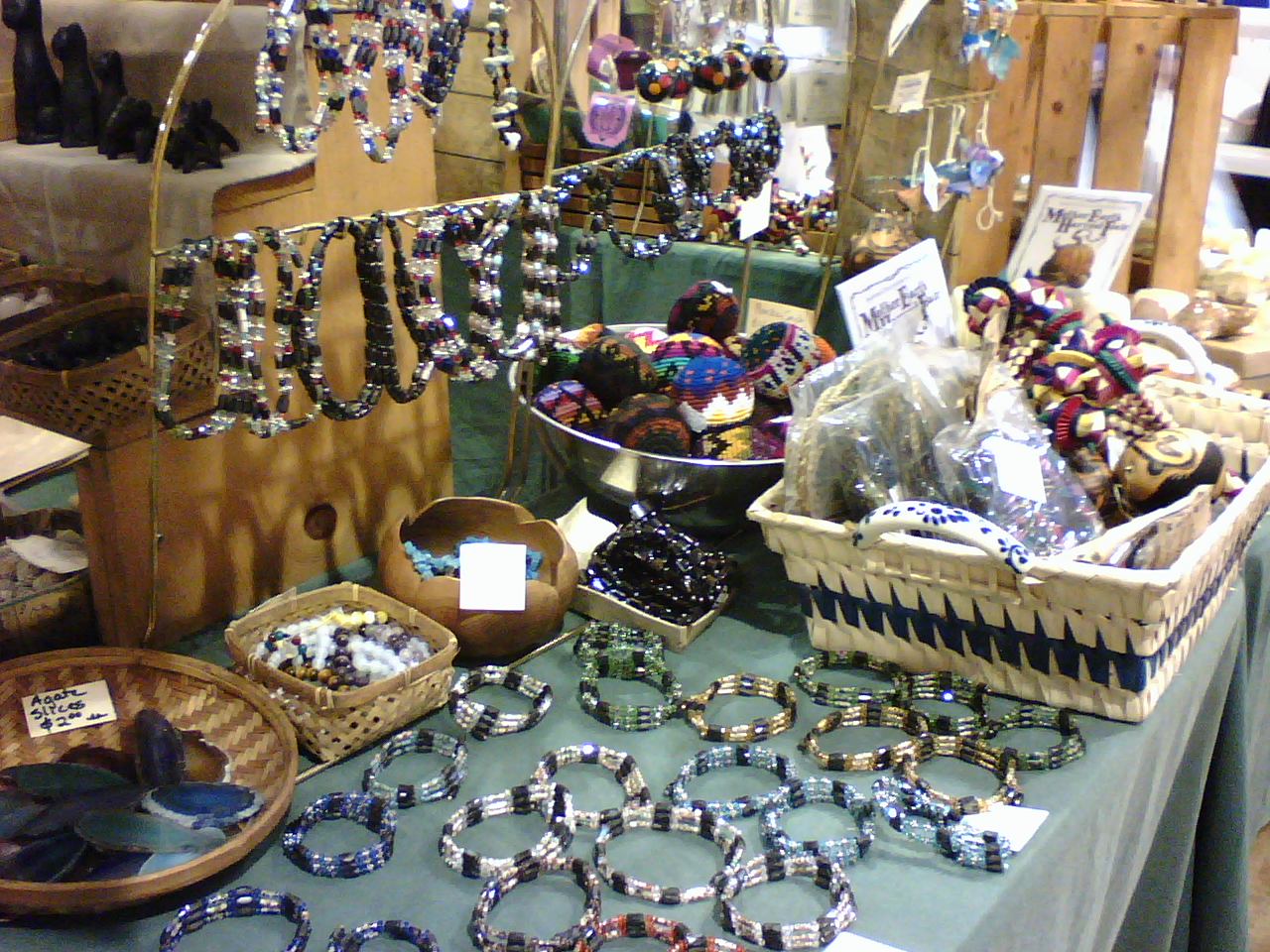 Now I am shifting to new education and writing projects, focusing on simple, sustainable living and social technologies such as consensus decisonmaking. I’m cashing out of Heathcote Earthings as a fundraiser for our new Social Technology Toolbox Summer Camp and its scholarship fund!
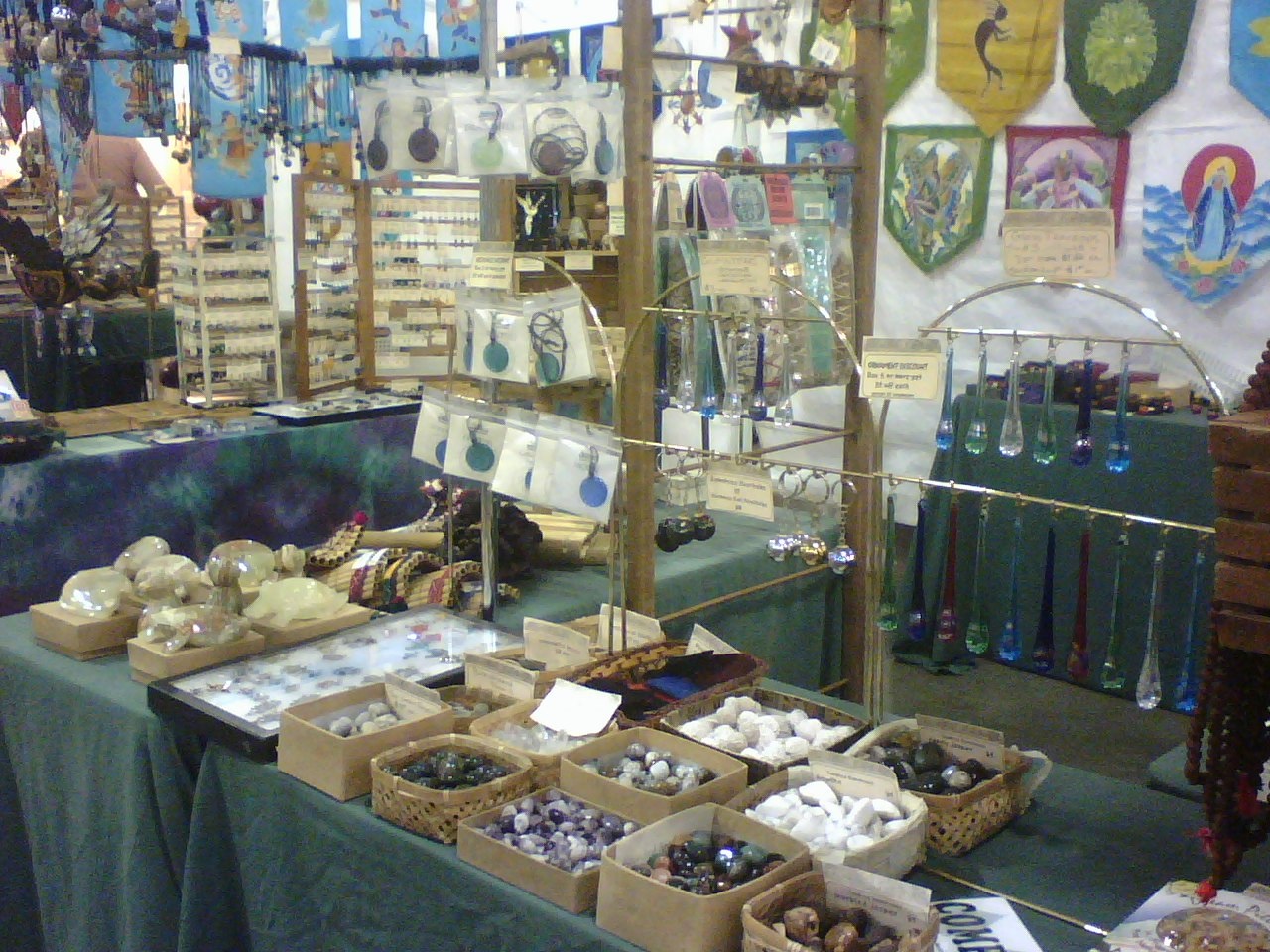
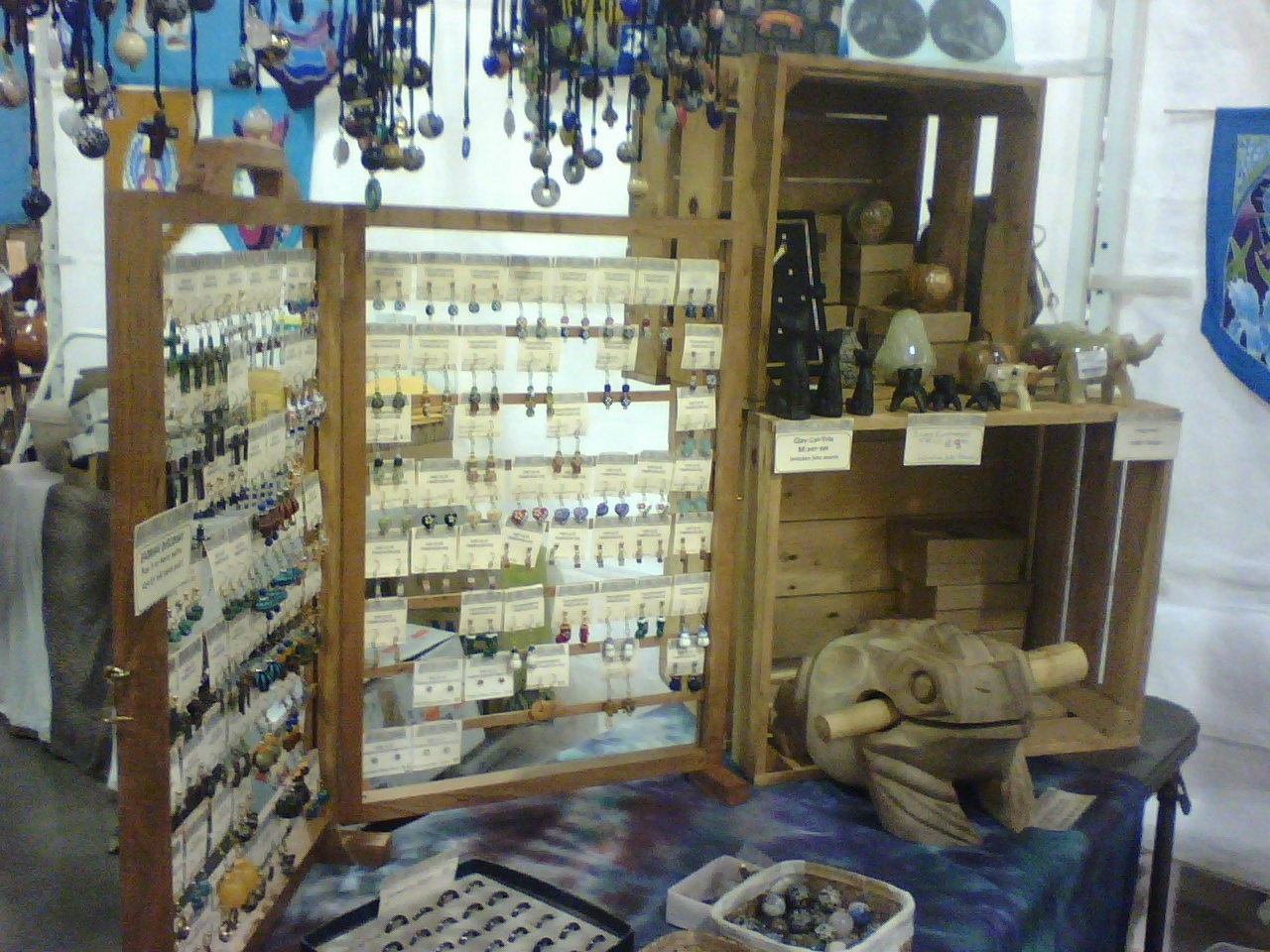
The remaining inventory and infrastructure of my festival business is on display at Heathcote Community in northern Baltimore County, Maryland, for two weekends only! I’ll wheel and deal on armloads of gemstones, handmade musical instruments, incense, buttons, bumperstickers, 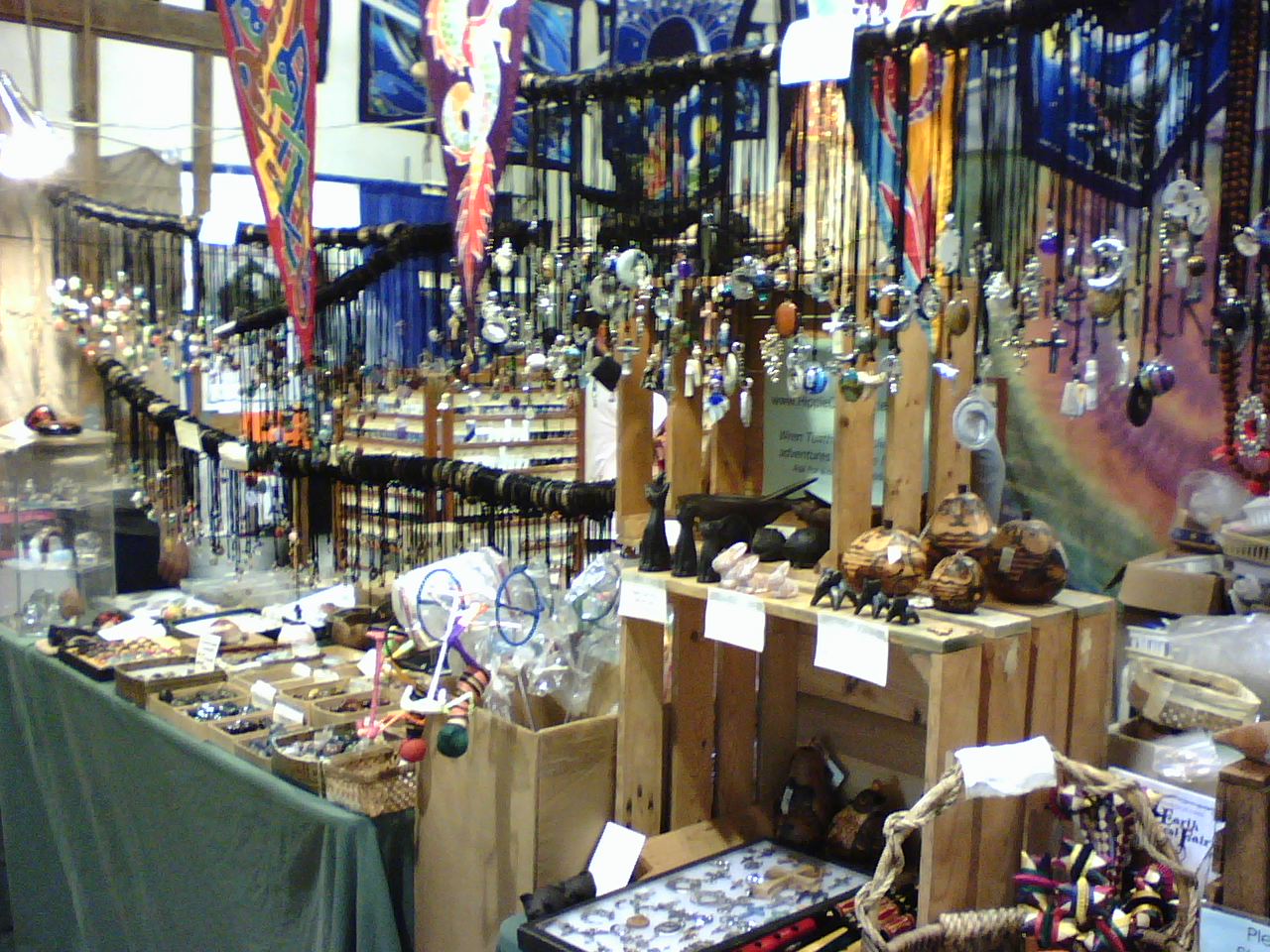 scarves, purses and of course, my handmade jewelry. Even the tables are for sale!
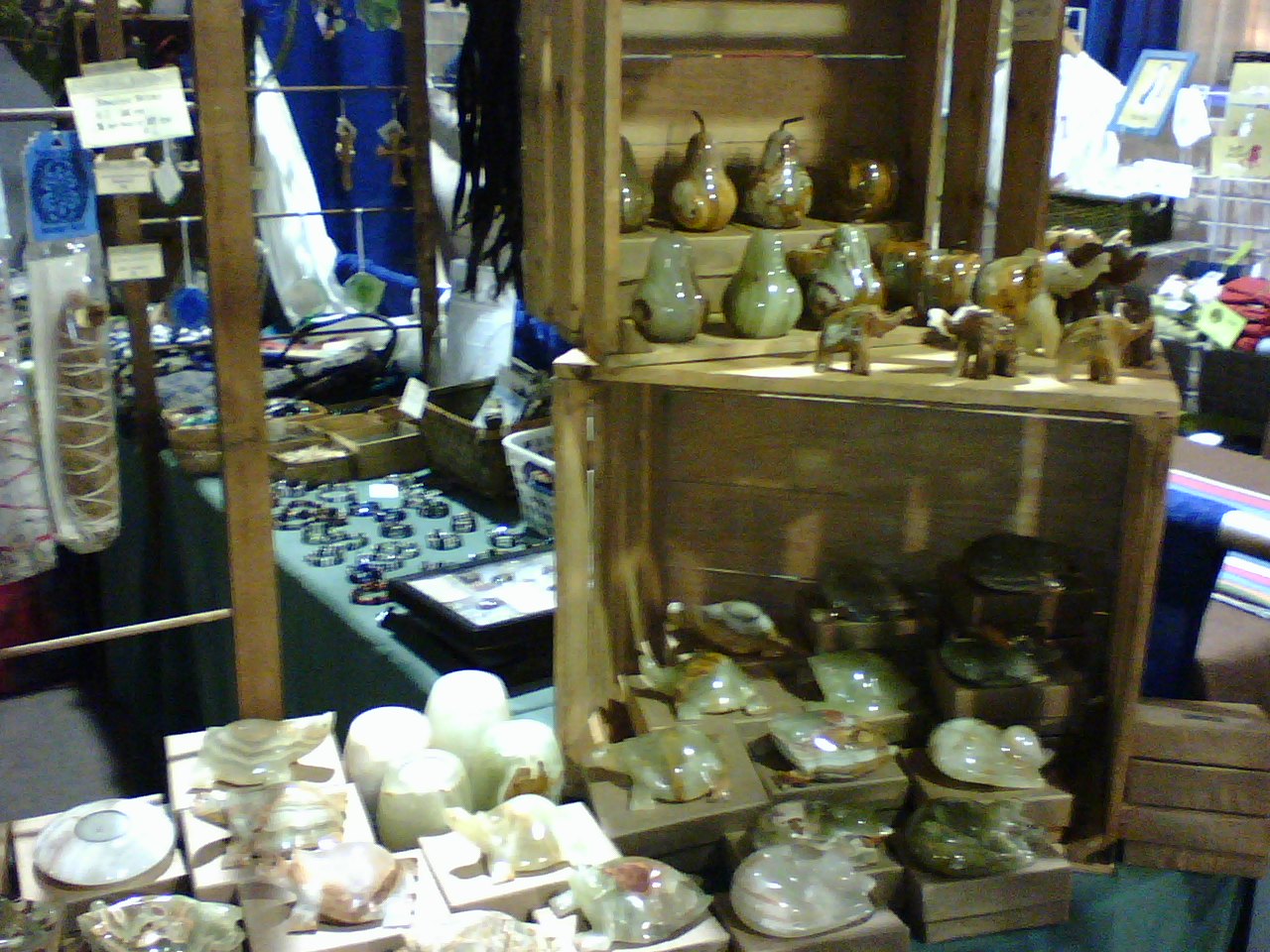
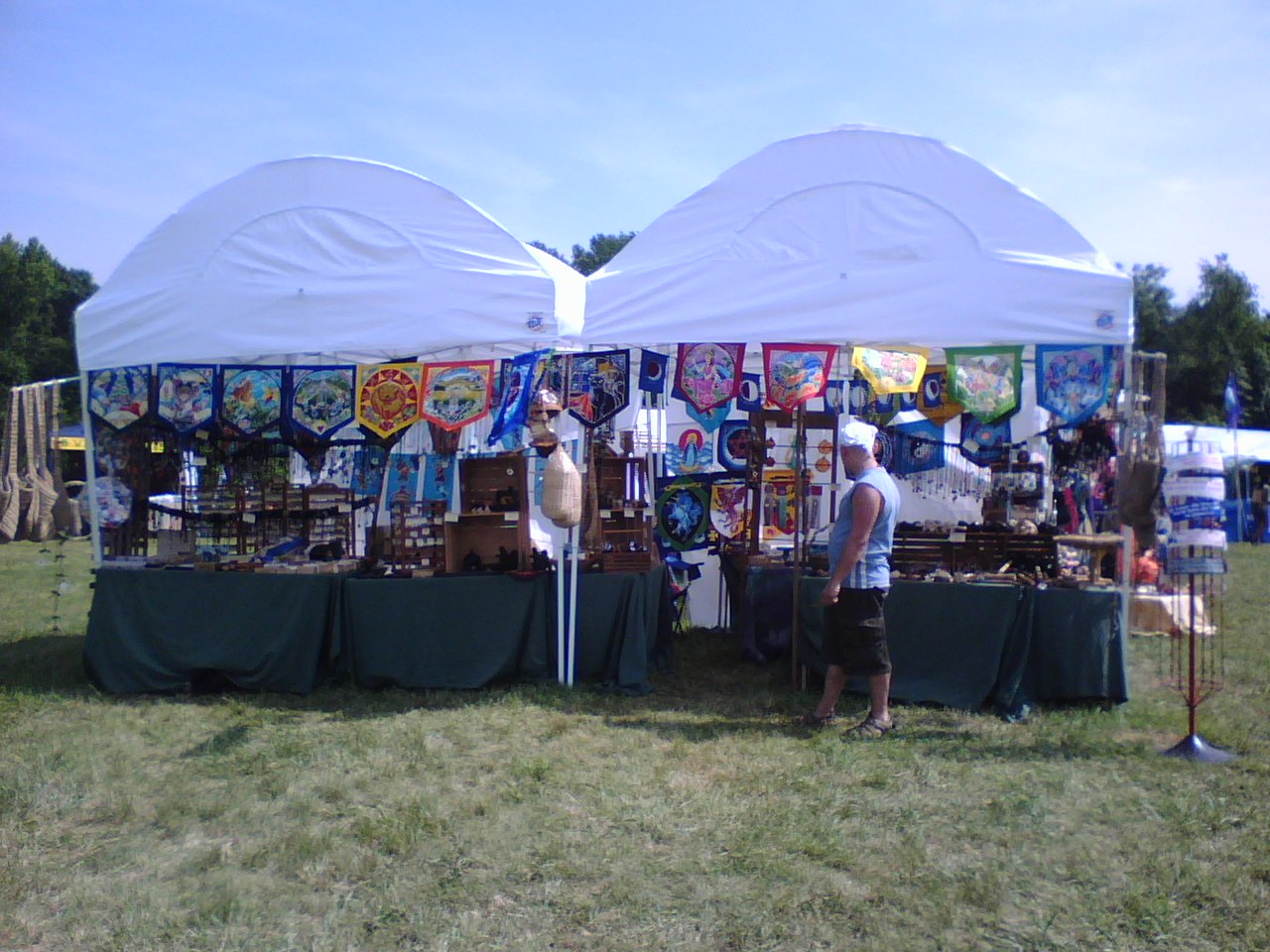
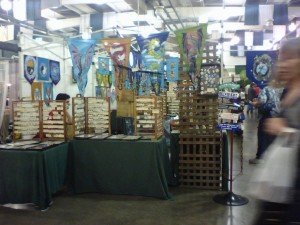
These photographs were taken during rare quiet moments in my booth, usually before or after events. I was too busy to document my little shop getting swamped with customers, so you’ll have to take my word that we were very popular, with great-selling collections. Some particular items you see in the photos might be sold out but you get a feel for our store and merchandise. Click on the image for a larger version.
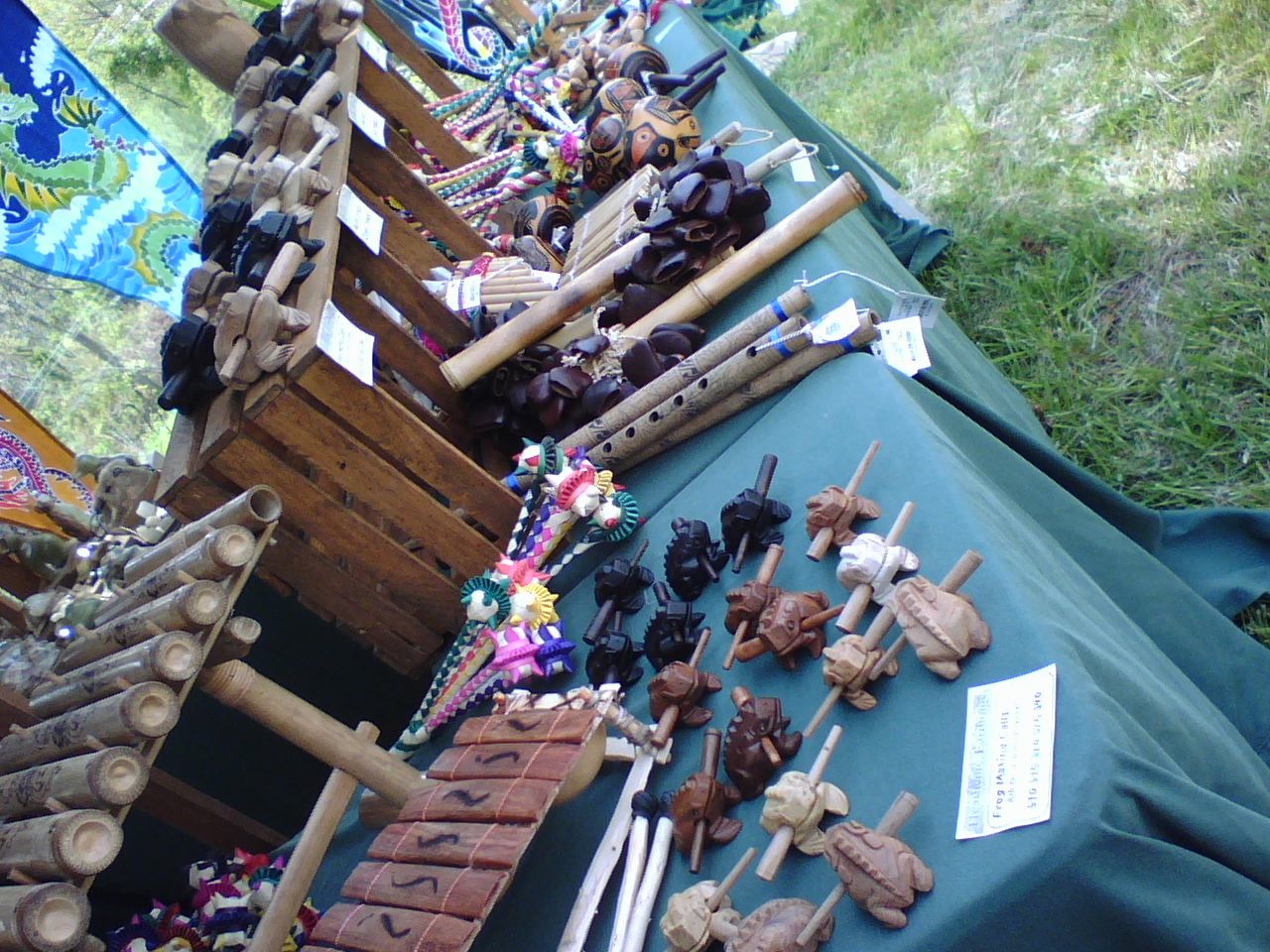 This porch sale will take place for two weekends only, June 10-12 and June 24-26 for the brief hours of 10 am to 2 pm. It will focus on new merchandise:
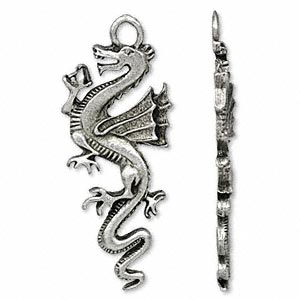
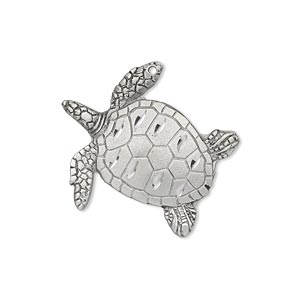
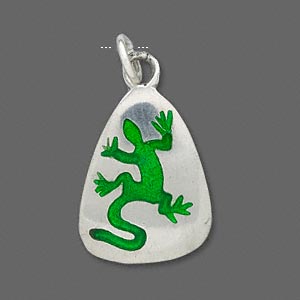
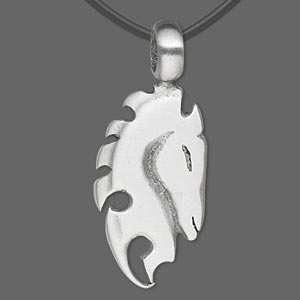
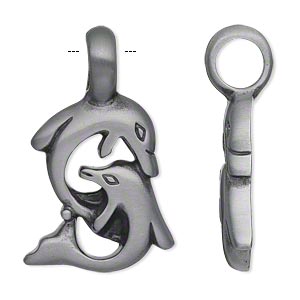
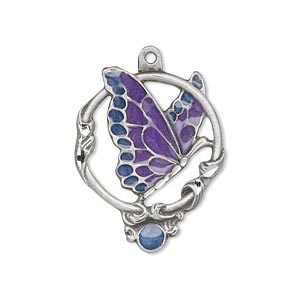
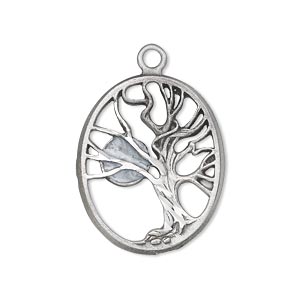
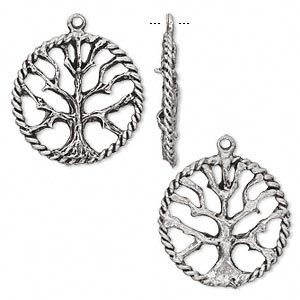
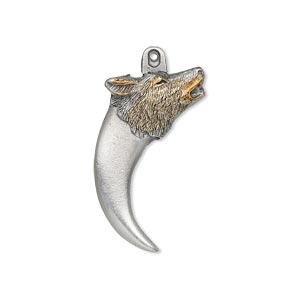
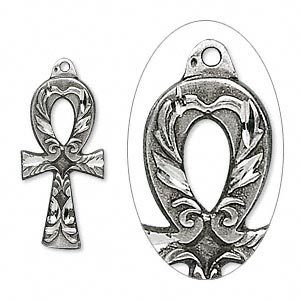
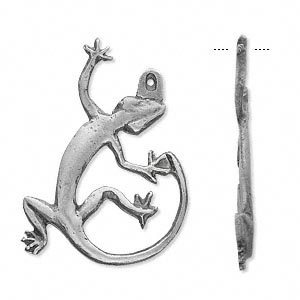
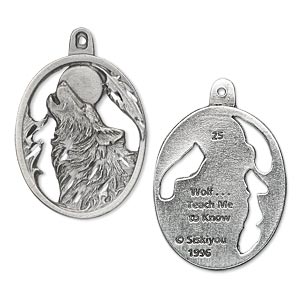
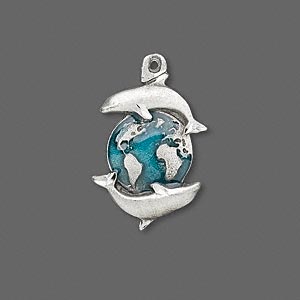
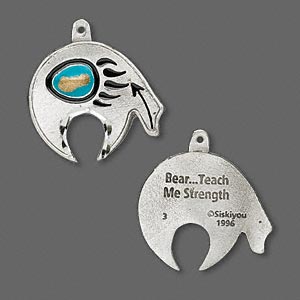
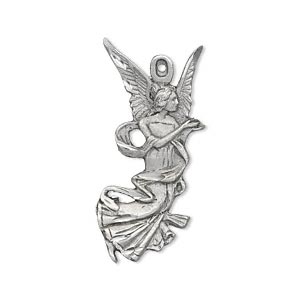
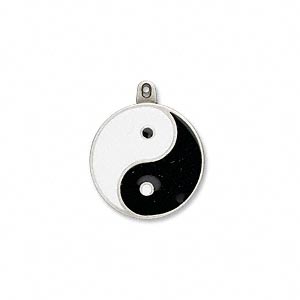
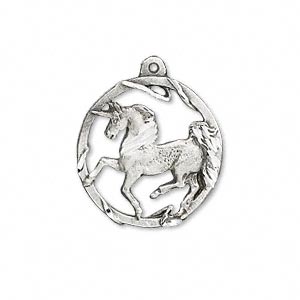
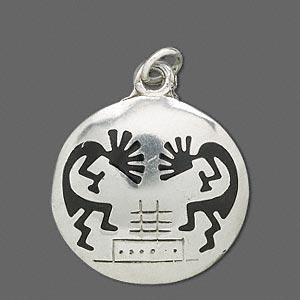
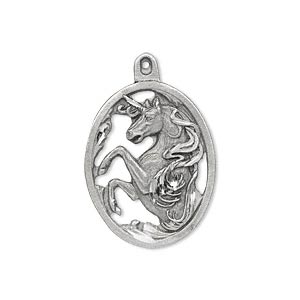
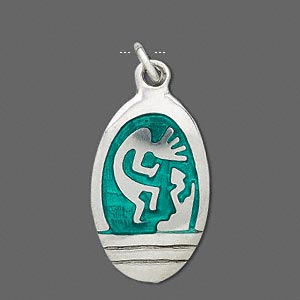
- diamond etched pewter pendants
- handmade earrings
- handmade pendants of gemstones, metal, wood, seeds, recycled glass, lampwork glass, etc.
- handmade rings
 bracelets
- gemstones hand wrapped in sterling silver
- handmade musical instruments
- handmade batik flags & pennants
- frog mating calls
- hackysacks
- scarves
- purses
- cloth shopping bags with great artwork
- funny buttons
- bumper stickers
 tumbled gemstones & fossils
- incense & burners
- car stickers with beautiful designs
- beads—CRAFTERS COME SEE!
- hand carved onyx figurines
Nearly everything is made out of NATURAL OR RECYCLED MATERIALS and is FAIR TRADE.
VENDORS and FLEA MARKET DEALERS will want to check out this inventory. Or if you have or have considered a FESTIVAL BUSINESS or CRAFT SHOP, this inventory will have you on your way.
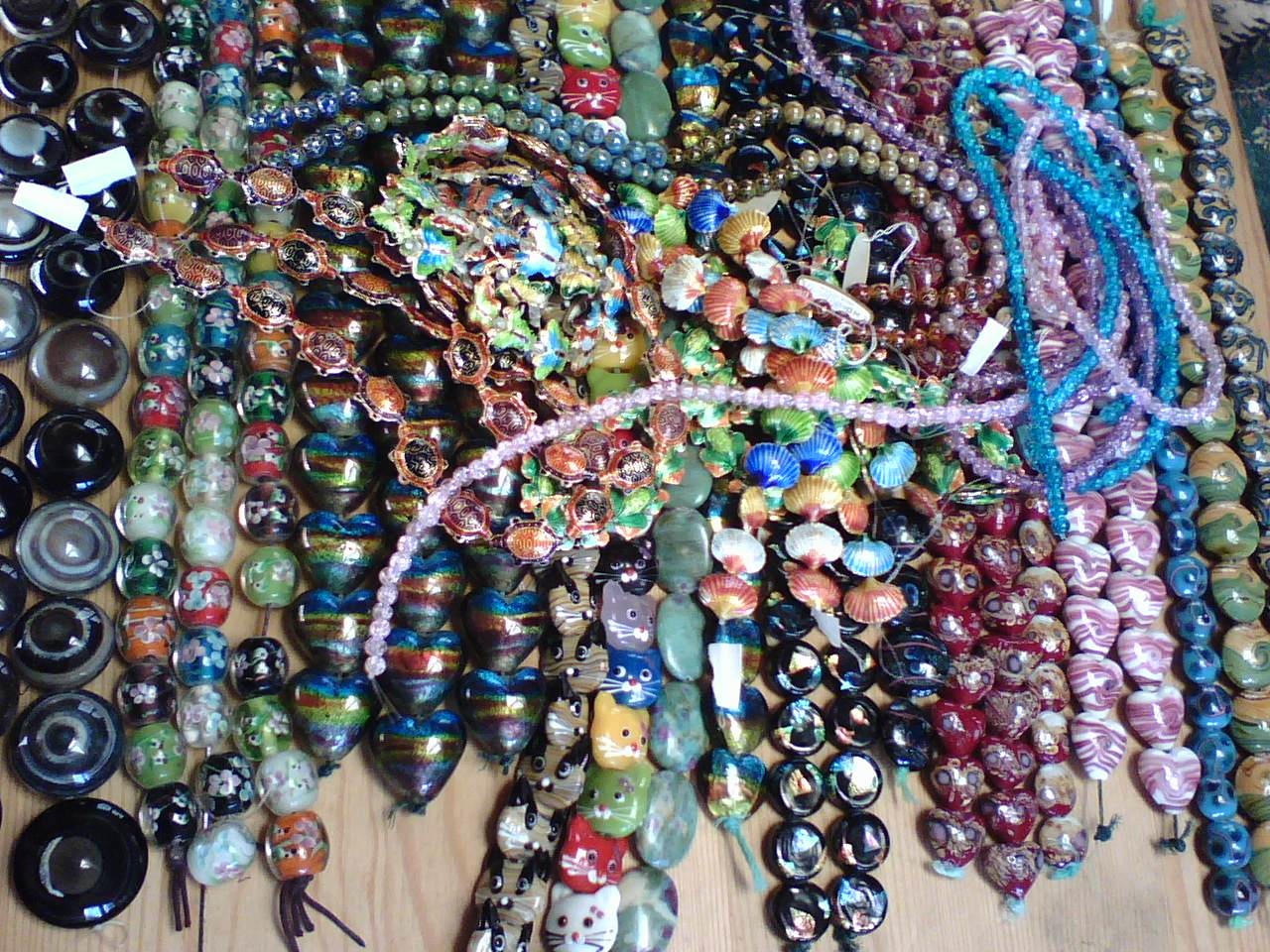 Because I had to pack up every item that didn’t sell after each show, I was very motivated to limit my stock to proven popular sellers. No experiments here!
And because I was seller and the business’ buyer, I had the great pleasure of only stocking products I was excited about and wanted to sell. I could screen for high quality at affordable prices and go for fair trade because the overhead for a festival business in comparatively low. This means that, whether you want to buy the business or just one necklace, it’s worth the  trip to my porch sale!
The space in enclosed, so we’re open, rain or shine! Thanks to Heathcote interns Anna and Lauren for helping me finish that job!
HIPPIE CHICK DIARIES PORCH SALE
JUNE 10-12 JUNE 24-26
10 AM TILL 2 PM
21300 HEATHCOTE ROAD FREELAND MD 21053
 GPS, Mapquest or email for directions, curiocoast@comcast.net
__________
I’ll also be offering a few used collections, specifically over fifty used VHS titles, CD’s and DVD’s.
All proceeds from the Hippie Chick Diaries Porch Sale go to support my newest project with C.T. Lawrence Butler, our Social Technology Toolbox Summer Camp! Half of the sale’s income will be earmarked specifically for the Toolbox Camp’s scholarship fund!!!
 As I say goodbye to colorful batiks and hackysacks, the earrings and necklaces I lovingly made (remember necklace salads?) and all those buttons and bumperstickers that made us laugh, I want to thank the many friends, partners and community mates who helped out with Earthings, a little or a lot. I know I’m forgetting people, so remind me! Here’s my list:
 Greg Newswanger
- John Fox
- Bob Geissel
- C.T. Butler
- Regina Tassone
- Rita Jane Leisure
- Kwame Bidi
- Karen Stupski
- Davi Post
- Gloria Brooks
- Juji Woodring
- Carol Seddon
- Ana Phillips
- Paul Phillips
- Kathy Landers
 Erika Kretzmer
- Nick Corso
- Iuval Clejan
- Devin Barto
- Robyn Jacobs
- Harriet Moon
- Theresa Foti
- Charles Curtiss
- Ursa Woodring
- Avin Newswanger





































Social Technology Toolbox Summer Camp July 15-24, 2011
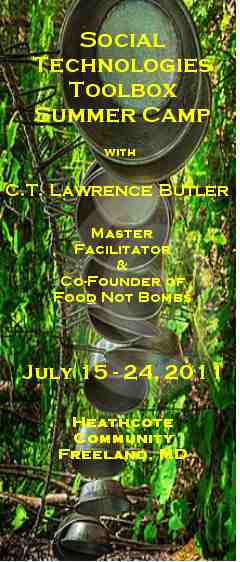
 How did we come up with the idea for a toolbox summer camp? C.T. Butler and I have been exploring how Intentional Communities and other groups succeed and how they understand (or often misunderstand) consensus. The idea of a “toolbox,” which members regularly update and use to build new culture, solve conflicts and grow as people, isn’t a new idea. What goes in it varies but adding to it seems key.
More than just a technique like Non-Violent Communication, “consensus is a cultural paradigm…a way of being in the world,” writes trainer Maikwe Schaub Ludwig. Yet few people get much more than a day or two of training in this “way of being.” Many more find themselves practicing it with no training!
A space happened to open up in Heathcote Community’s education calendar. And when C.T. and I considered it for a weekend slot, we realized we had the chance to really help people go deep and get it!
We sprang into action and put together many of the ideas we’d been collecting. Ta dah! Toolbox Camp!
Below is the text of our brochure:
Are you currently part of an organization, activist group, non-profit, Cohousing or Intentional Community that’s having trouble with governance, decisionmaking or communication?
• Does your group feel a time pressure when making decisions?
• In discussions, does everyone speak?
• Does your group accomplish its goals?
• Do some people dominate? Is there burnout?
• Is the workload uneven? Organizational structure vague?
• Does it seem members just don’t hear each other?
C.T. Butler and Wren Tuatha been going deeper into the nature of consensus, how to teach it and how to help groups succeed. We’ve gotten clear that consensus is amazing and transformative, but that it’s a major paradigm shift for most groups. It’s more than just exchanging Robert’s Rules for Butler’s. C.T. isn’t just offering new software, so to speak, but a whole new operating system.
We are offering these skill building experiences designed to help Communities, activist groups, non-profits, spiritual groups, families, etc., succeed in their goals through awareness of the structures of group dynamics—decisionmaking, conflict resolution, mediation, listening, and communication that integrates head, heart and gut.
SOCIAL TECHNOLOGY TOOLBOX SUMMER CAMP
July 15-24, 2011
A 10 day immersion, starting with a weekend workshop called Consensus, Body and Soul. Then, together, we’ll create temporary consensus-based community. The mornings will be devoted to ZEGG Forum and deeper consensus workshops. Each  afternoon, we will add techniques and perspectives like Enneagrams, JoHari Window, Spiral Dynamics, Heart of Now, etc. The group will make decisions together at plenaries and participants can offerπ content of their own each evening through Open Space Technology.
Simply, we’re all about finding the voice of the group. After thirty years in the field of consensus, C.T. presents a clear vision of egalitarian freedom through use of structure that brings the common values to life within the group.
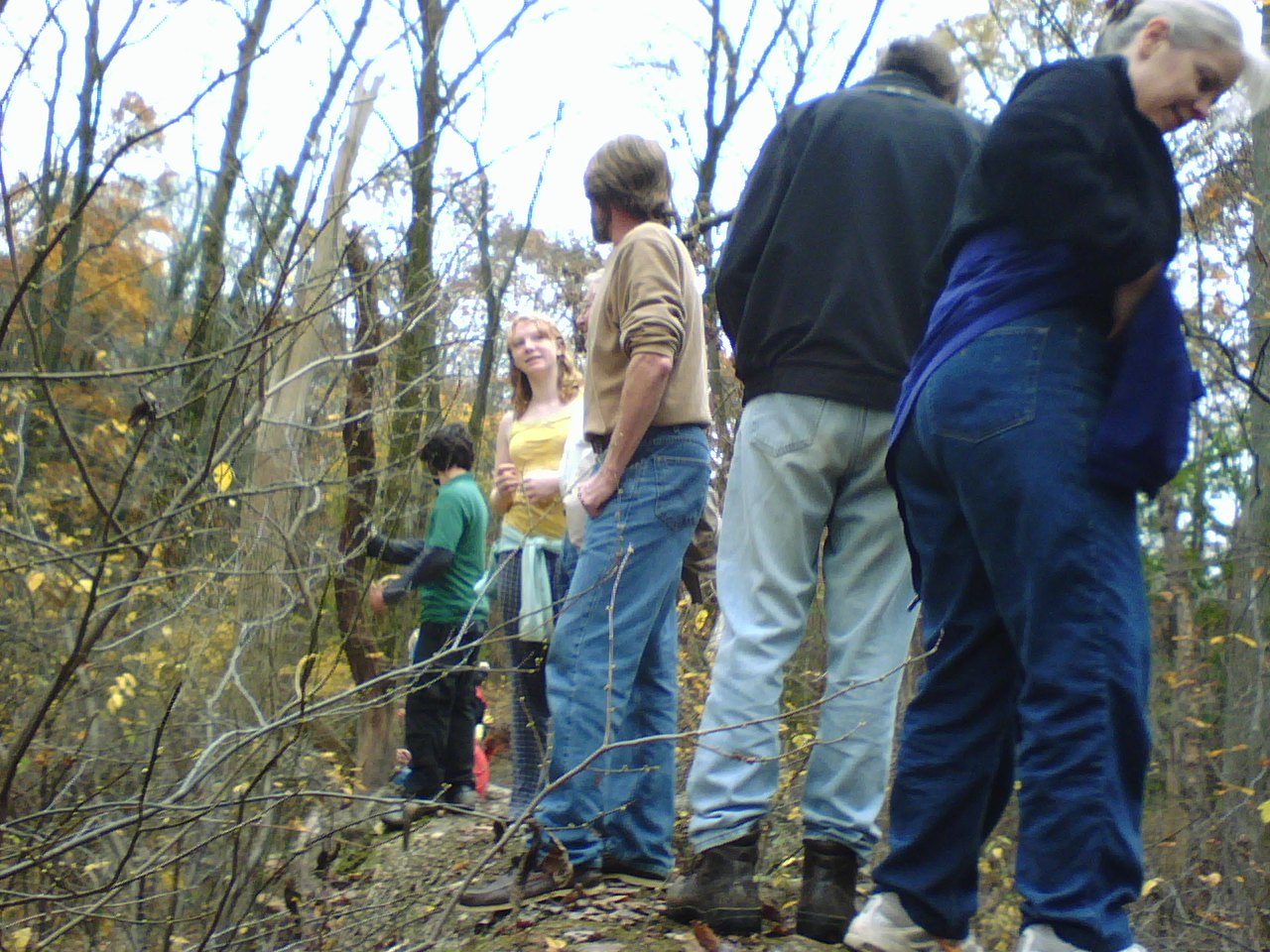 Some lessons are collected from other wise travelers, others are plucked from our own experiences in groups. Even as we make our offerings, the paradigm is leaderless and participant generated. We are curious about you. What do you bring?
LOGISTICS
Request a brochure with the application form at curiocoast@comcast.net. Costs include fixed fees for materials, food and lodging, and a sliding scale for tuition.
Structured programming begins Friday evening, July 15. and ends at noon on Sunday, July 24. Lodging options are camping and the Heathcote Mill bunkroom. 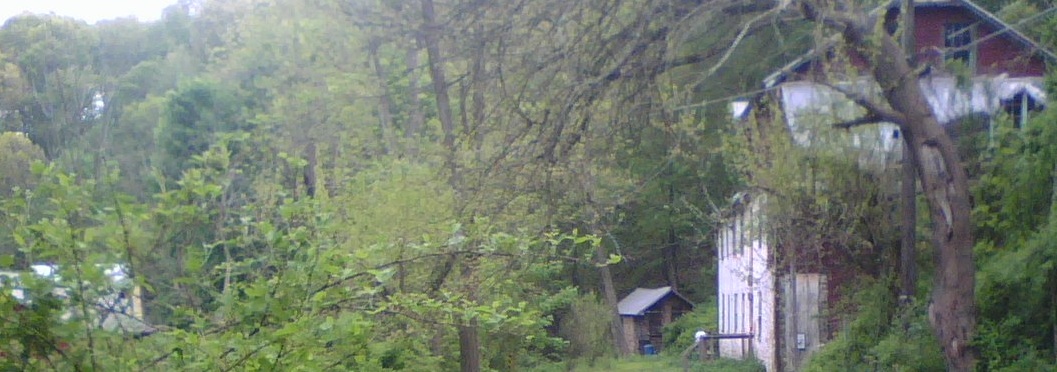 Accommodations are rustic and, like most forests, the land does have poison ivy/oak and ticks that carry lyme disease. Heathcote is a vegetarian facility, and drug and alcohol free. Carpooling is encouraged. You will receive a packet with directions, a Heathcote orientation, packing lists, schedules and other logistics upon registration. The packet will include requests for food allergy and other special needs information.
Please join our Hippie Chick Diaries fan page on Facebook!