Peace with Every Purchase: ConsumersForPeace.org
Kudos to Heathcote Earthings‘ wholesaler Northern Sun for including a little card in my recent order:


I don’t have time to post about their site now; Off to change a flat tire on Earthings’ new van before setting up for Common Ground on the Hill music festival. But I will be looking into making these cards available at our Heathcote Earthings booth. You can request copies or download them on ConsumersForPeace.org. Spread the word!
Join our Hippie Chick Diaries fanpage on facebook!
Subscribe to this blog's RSS feed
Harold’s Challenge for a Better Answer to War; Wren’s Answer: Blue Jellyfish and The Line of Other
[Harold, an osteopath from Virginia, is pictured above teaching tantra--quite a peaceful practice itself!]
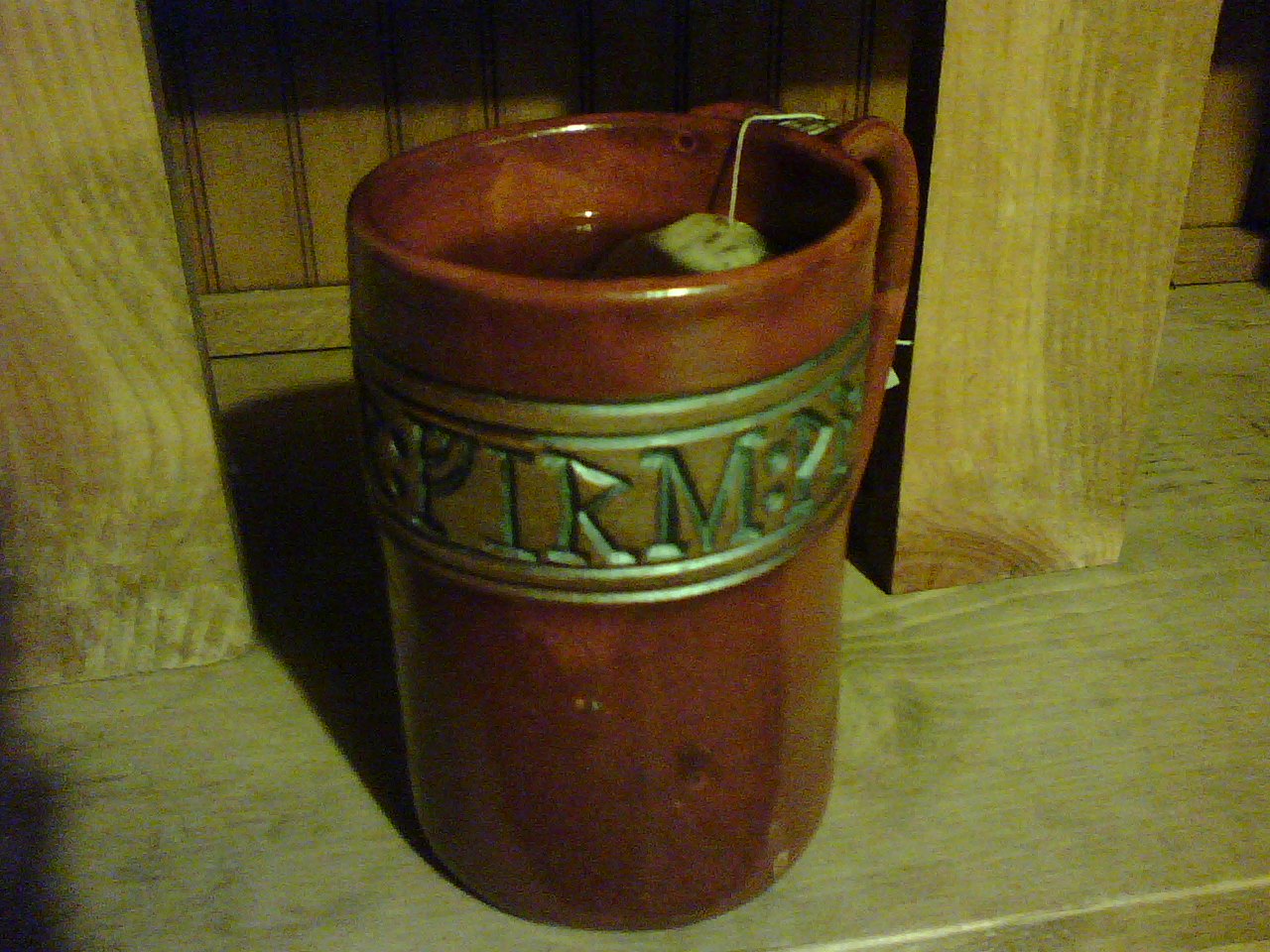 Now that I’ve had my tea, I’m thinking about the human history of war and peace. Within Heathcote, my Intentional Community, everyone who lives here commits to our conflict resolution policy. It’s developed by consensus, so members who see improvements to be made in our process can bring them up. It’s a living, evolving agreement. But it’s only practiced among those who stay. Someone, for example, with a strong need to be right can just say, “This is bullshit,” and leave. The members who stay with Heathcote’s culture of processing end up being of similar temperament, having tremendous patience and commitment not to their own plan but to the higher good. So within the bubble of Heathcote, the process works fairly well. Extending that bubble to the entire planet is another issue. I can’t even get Heathcote’s neighbors to return my calls to meet with me about our beaver issue. I don’t feel equipped to stop a war among those determined to have one.
 Yet the yield of any war that humans have waged has only ever been some land grabbing (creating historical amnesia and generational resentment for millennia, as pointed out in my favorite t-shirt, to the right), some winners, some big losers and countless dead. Still, my own generation continues this tradition, this entitlement to tunnel vision. I wonder how evolved we really are. Am I wrong to believe that we have the capacity to come together as humans planetwide?
Last night I caught a nature program showing the blue jellyfish. Its body is a bubble shaped to act like a sail. But half the creatures have their body sails pointing them left and half point right. So half sail out to sea to live life and procreate and half wash up on the beaches of Australia (see picture below). The randomness of evolution dooms half their population to death.
 So even as I feel within me a tremendous capacity for peace, why should I assume that’s a universal human experience? How do nature and nurture influence a person’s ability to justify war, or violence of any kind?
Maybe I should switch to herbal tea. But my answer to such questions has always been to make my own choices, such as living in community and buying in to our process, and being available as model/guinea pig for those who want to come and learn. Maybe, Harold, witnessing is my personal answer.
A huge influence on the actions of humans seems to be what I call the line of other.
Individuals and cultures have this invisible line they cast out around them. Some people and living things are on their side of the line–family, friends, community, pets, nation. Then there are living things and people that are outside of this line–plants and animals one eats, other nations, people who are different in some triggering way. The line defines how we treat others. If you’re inside someone’s line, The Golden Rule applies. If you’re outside someone’s line, it does not. They can torture animals in factory farms and slaughter houses because they’re not like “us,” they’re “other.” They can invade another country with no obligation to understand its people’s culture or objections because they’re “other.” The line of other creates an impunity that terrifies me.
 I hope my life and my choices help to negotiate a collective moving out of that line of other to include all life on Earth and the planet itself. I try to model this in my Open Classroom teaching, promoting fair trade with Heathcote Earthings and inviting dialog on Hippie Chick Diaries.
I get frequent emails from partners in this work who are fearful of humanity’s direction and impatient to make major changes.
Looking at the systems of nature, as Permaculture teaches me to do, I see that lasting change happens in two ways–catastrophically and incrementally.
War and natural disasters are catastrophic changes. They happen without my help, and will continue to. I don’t wish for them, as some do. I try to make my peace with their rhythms and minimize my carbon footprint. Incremental change feels more peaceful to me and I am satisfied with my little victories of having information about sustainability or Intentional Community when someone comes asking, or witnessing for animal rights or human rights when I hear someone being intolerant. And I live as lightly as I can every day. I’m not a monk but I’m not a soccer mom, either.
Maybe, Harold, walking my talk for those who will notice is my answer. And like every creature that evolves, my answer is a work in progress.
I’m looking forward to everyone’s thoughts!
–Wren Tuatha

Hi. I really like your website. I noticed the photo of the sign outside your main building “War is not the answer”, but no suggested alternative. So I wondered if it would be more in line with your philosophy to offer what COULD be the answer? Maybe that should be a topic for discussion, leading to a second sign offering the new direction for those who would like to agree with the first one if they had any other ideas?
Harold, Hi! And thanks for visiting and commenting! Good idea to phrase things in the positive instead of the negative. I just woke up so all I have right now is, “Tea is the answer.” A good backrub would solve a few of my woes, too…
Funny that you make this comment now, because I’ve just spent a week intensely processing conflicts within the community and with some neighbors. And it’s clear that peace, or specifically conflict resolution, only works as an answer if all parties buy in. Still, you won’t catch me buying in to the war…