Heathcote Community Hosts Baltimore Racial Justice Action
Forwarding press release—WT:
Achieving Racial Equity in Our Communities and Beyond
Have you heard the phrase “white privilege?” Why are people talking about it? What is it? Who has it? What can we do with it? How can we be sure that what we are trying to achieve will not maintain unequal patterns and disparities in outcomes? If you are interested in these topics but are afraid to explore them for fear of being misunderstood or “called out;” if you are struggling with your own baggage around these issues or want to increase your understanding of and effectiveness in diverse environments; if you’re working on grass-roots organizing, working with community organizations, just your own family, or want to organize your own anti-racism community, come join us. In this workshop we will view the video, Mirrors of Privilege: Making Whiteness Visible and engage in a facilitated, safe but frank discussion of contemporary race-related issues.
No matter where you are in your journey, BRJA provides a supportive, non-judgmental community of trainers/facilitators.
All are welcome to join us.
Suggested donation: $5 – $20.
Friday, May 13th
6:00 – 9:00 pm
HEATHCOTE COMMUNITY
21300 Heathcote Road
Freeland, MD 21053
Please join our Hippie Chick Diaries fan page on Facebook!
Subscribe to this blog's RSS feed
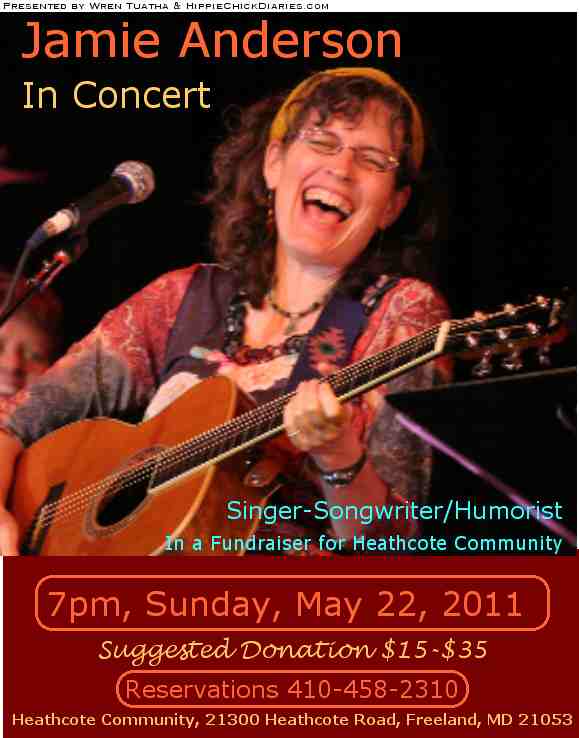
May 22 Fundraiser for Heathcote Land, Permaculture; Features Jamie Anderson
 In my world, Permaculture education and comedic Lesbian folk music are a luscious combination, like chocolate and peanut butter. Remember those Reese’s commercials in which one person is walking down the street eating a chocolate bar and someone is walking towards them eating from a jar of peanut butter and they’re both so self absorbed that they don’t see the other, collide, and their food gets combined, thus delivering them to a higher level of Nirvana? Well, Jamie Anderson probably has a song about that.
I’ve been keeping it in the back of my mind that I’d like to get Jamie to Heathcote Community for our House Concert Series, and now that chocolaty muse has collided with Heathcote’s exciting new opportunity: An adjoining piece of land which we’ve always held dear is for sale, giving us a chance to greatly expand our organic farming and Permaculture education programs. Oooh! Peanut butter!
The Anacker Land
 Heathcote Community was founded in 1965 when Bill and Margaret Anacker, members of the School of Living, sold a 37 acre parcel of their land to SoL as a headquarters for the magazine Green Revolution and as a homesteading demonstration site. As a 1960’s & 70’s style hippie commune sprouted and grew on the land, Bill and Margaret were very involved, mentoring young folks in homesteading and sustainability skills. The community overlapped onto other parts of the Anackers’ land and the community evolved into a wimmin’s land through the 80’s and eventually a mixed queer & straight community of settled members. Over time, Heathcote acquired parcels we call the Farmhouse land and Cabin land, or, Back 70, both of which had previously been the Anackers’, and which helped us expand our membership and unify our little valley.
 Now with Margaret passed on and Bill needing eldercare, the Anacker family is selling the 24 acre parcel on which Bill and Margaret homesteaded for so long. This land would give Heathcote our first substantial ridge top acreage, suitable for gardening/farming we haven’t been able to do down in our narrow valley and flood plain. This would allow us to expand our Permaculture education, internships and community membership, and provide crops for donation, Community Supported Agriculture (CSA) and/or market gardening, as well as allowing Heathcote to increase our food self-sufficiency.
We have some substantial pledges from large donors, starting us on our way. We’re partnering with Fusion of Baltimore as our fiscal sponsors. We’ve formed a fundraising committee and seek broad community support for bringing the Anacker land into the community.
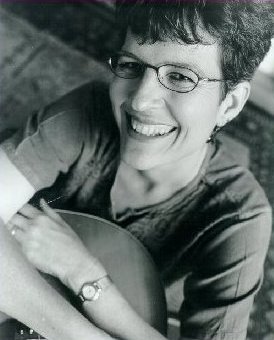 Jamie Anderson
Award winning singer-songwriter/parking lot attendant Anderson plays tunes that go from sexy to silly, witty to whimsical. She first hit my radar when Louisville DJ and Yer Girlfriend vocalist Laura Shine played her music at a time when we were first launching our Fairness Campaign there. She’s been on my playlist ever since!
She draws from many influences. As her website explains: She’s country without the big hair, bluegrass without the whiny tenor, blues without selling her soul and rock without the dirty t-shirt.
Besides songs that range from laugh out loud to tugging on your heartstrings, Jamie is adept at improving witty, thoughtful intros and stories. Her shows are great entertainment on many levels!
 More nibblets from her site:
When Jamie isn’t touring, she’s taught songwriting, guitar and other classes at Duke University, arts centers, privately and at festivals all over the country. She has a chapter in Songwriting and the Guitar, a book that also includes Paul Simon, The Indigo Girls, Joni Mitchell and others. Jamie is a freelance writer whose articles and CD reviews have appeared in Acoustic Guitar, Curve, SingOut! and more.
Anderson’s awards include Finalist (USA Songwriting Competition, “Your Mama Scares Me,” 2008), the Jane Schliessman Award for Outstanding Contributions to Women’s Music (Women in the Arts, 2006), Best Folk Album (The Independent, A Promise of Light, 2005), Honorable Mention (Great American Song Contest, “Beautiful,” 2005), and others that only her mama cares about.
Save the date: May 22, 7pm. And stay tuned to Hippie Chick Diaries for more articles with links to Jamie’s songs and details about our silent auction and plant sales!
Please join our Hippie Chick Diaries fan page on Facebook!
Too Busy for The L-Word
 One thing that is the same at Heathcote, my Intentional Community, as in the wider world is our tendency to over-schedule and over-commit.
It’s a predictable comedy when we whip out our calendars at meetings and try to find a date for any outing, celebration or committee work. We’re certain to settle on some compromise date that leaves some people falling off the edges, “I can’t be there, but you all have it without me…”
Even as I shift my own projects, saying good bye to Open Classroom and selling off our fair trade retail venture Heathcote Earthings, my freed-up weekends have somehow gotten scheduled.
Nature abhors that vacuum; Wherever it appears, here comes stuff flying in!
Last summer, I kept the Communities Conference at Twin Oaks on my calendar for months. Finally I would get to go, represent Heathcote, market ZEGG Forum to Communities, network, play, eat, etc.
But wait! Along came Mother Earth Harvest Fair, holding an organizing meeting on the same weekend, conflicting with a great gathering at which I could have marketed…Mother Earth Harvest Fair.
Notice the subtle difference in saying, “This is when the meeting is,” versus, “When can you meet?” In either case, I expect you’ll have people dropped off the edges. But if I’m invited to find a date that works for me and that becomes difficult, I can opt to serve the higher good with my, “You all meet without me.” If I’m informed of a date and I have a conflict, I’m faced with breaking one commitment or the other. It’s a subtlety of inclusion and empowerment, I know.
So…I had low expectations when I opened my Netflix in the Heathcote kitchen and announced to the random Heathcoters within earshot, “Hey, I have season one of The L-Word! Who wants to watch?” Karen, my sister in queerness, zoomed up to answer me. “I’ve always wanted to watch that but I haven’t gotten around to it!”
That was the case with me, as well. Two over-scheduled gurrls, living in the woods who haven’t gotten around to checking out the now-canceled L-Word since it first aired in 2004…Ah…Sad.
“Can you watch it tonight?” I cringed, not daring to hope. I could see this collaboration log jamming my Netflix queue for the next month.
“Well, I have one thing I really have to do, but after that, maybe eight o’clock?”
What just happened? Did she say tonight?
She was clearly trying to calm the series of faces I was making, but I took the offer. And it only took until half way through dinner for Karen to warn me of her second thoughts. “I’m really feeling tired,” And, on schedule, half way through dinner cleanup she recanted, “I really want to see it but I know I’m not going to make it through. I’m just wiped out…”

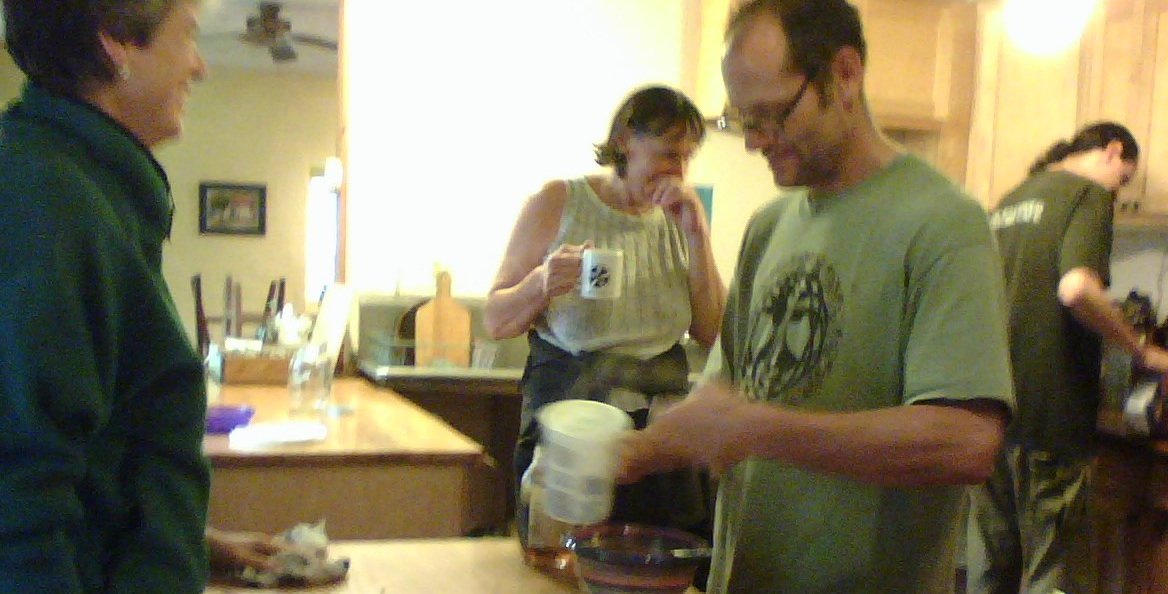
You can put the tea in Ellie, my favorite mug. It has a band of runes that spell the four elements. I don't see that on The L-Word...
Watching on my own, I found out this land dyke wasn’t missing anything. I bailed after three episodes; I just wasn’t hooked. I can’t relate to rich lipstick sisters and their suburban problems. I’m still hoping for some Princess Charming who doesn’t know she has motor oil behind her ear (so cute) to saunter over here and haul this goat chow up the hill, and then make me some ginger nettle tea and massage my aching joints…between her many committee meetings.
Please join our Hippie Chick Diaries fan page on Facebook!
Community Plus Partner: Integrating Significant Others
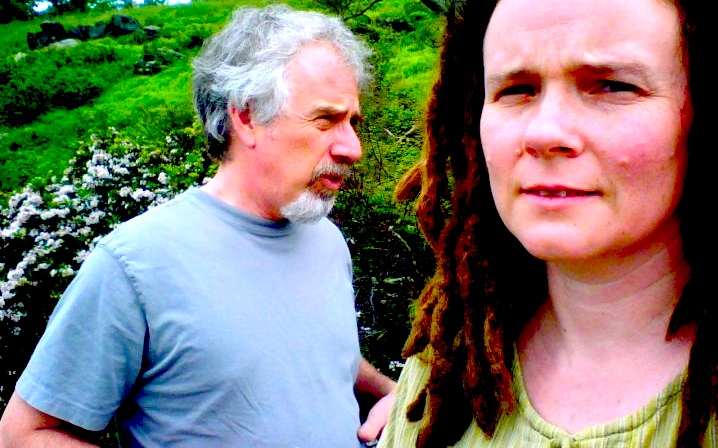 Relationships, polyamorous or monogamous, are complicated enough. Imagine if all your friends had to reach consensus on whether you and your sweetie(s) could move in together. Well, actually, your friends might relish that power. Anyway, welcome to the alien terrain in which my partner and I find ourselves. I live at Heathcote Community and in order for my partner to share my home, he has to apply and be accepted as a member of the Community, a process that can take eight months or more to be finalized.
Even though Heathcote is a mixture of couples and singles, this is not an issue we’ve often faced, considering a membership application from an existing member’s lover. It’s a very different dynamic than welcoming a couple together or an individual. What happens if someone doesn’t like this new partner?
In our tried and true process, we invite an applicant to visit for 21 days, either consecutively or over time. We get acquainted and discuss the Community’s values, systems, etc. Either the applicant or a Heathcoter can decide at any time that things don’t seem to be a match. But if all seems cozy, we approve the applicant to move in and begin a seven month provisional membership period.
But what if there is an issue, and it’s a community member’s lover? The stakes get much higher. If the Community rejects this applicant, they stand a good chance of losing an existing member, too. Will people feel pressured, in that case, to ignore problems?
 My partner, C.T., has unique worries. He’s a consensus trainer and writer. Will Community members feel self conscious practicing consensus around him, or will they be resistant to his thoughts on our process, assuming that he expects us to do things his way? How to tread lightly and lovingly when you’re something of a big wig in your field…
Mostly things are smooth sailing so far. But I know everyone’s aware of the new dynamic. We did dance here briefly before when a former partner of mine applied. That was quite a minefield, as that partner truly wasn’t a fit for Heathcote, despite being likable on many levels.
Now C.T. and I aren’t the only ones. Nick’s partner Rachel has applied for membership. Previously, I experienced that moving to a small, rural Community as a single person was a decision to remain single. It seemed very hard to make, maintain and grow connections.
Did something shift? Has the internet negated that isolation? I have had good luck with GreenSingles… Whatever the case, along with the singles and couples interested in Heathcote, we also have partners coming to roost!
—WT
Please join our Hippie Chick Diaries fan page on Facebook!
Gaia University Open House: Feb. 19, 2011, 1-3 PM at Heathcote Community
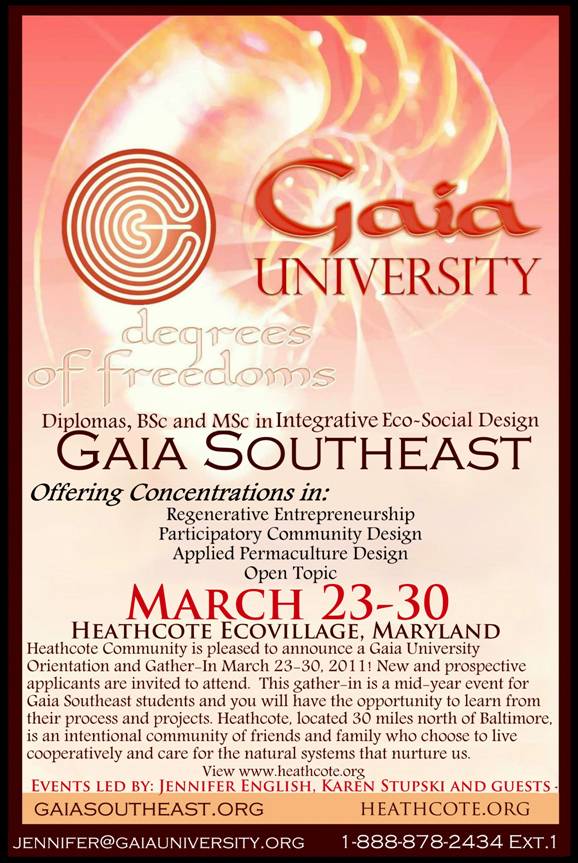
Come to our Gaia University’s Open House!
Feb. 19, 2011, 1-3 PM at Heathcote Community
Learn about Gaia University, an institution for higher learning with a unique approach. The students (called associates) are able to earn accredited Bachelors & Masters degrees and Graduate Diplomas whilst being actively engaged in self and planetary transformation and ecosocial regeneration. The Open House will provide an overview of Gaia University’s action learning methodology and our programs in Integrative EcoSocial Design and Open Topic. Heathcote is partnering with Gaia Southeast to host a Gaia Gather-In March 23-30, 2011.
Please RSVP by Feb. 16 by calling 410-357-9523
or email education@heathcote.org
Note from Wren: Karen Stupski and I attended some of the first organizational gatherings of Gaia University at The Farm in Tennessee several years ago. I was electrified at the bold notion that our alternative culture could create higher education models that reflect our values and priorities. This is where I first encountered Spiral Dynamics and Action Learning. Gaia U founders Liora Adler and Andy Langford brought a clarity of vision that has propelled ideas into the realities of several learning pathways.
It’s been exciting to watch this university without walls attract more and more students and more sites each year. Whether or not you are planning to enroll, consider this Open House as a way to learn about alternatives you can promote to the next generation, or even people seeking a career change. Imagine majoring in Permaculture or Facilitation instead of Business…—WT
Please join our Hippie Chick Diaries fan page on Facebook!
STILL A Revolutionary Decision-Making Process
From Wren: I’m reproducing this article from several years ago, with C.T.’s permission. C.T. Butler and I, along with a forming collective of facilitators, have been putting new language to the many paradigm shifts that help practitioners of consensus decision-making succeed in conducting meetings that reflect the egalitarian, non-violent, post-privilege world in which we want to live. This article, nearly twenty years old, shows that, although we’re bringing clarity and new language to the subtle concepts that help consensus succeed, they’re not all new ideas. —WT
 By C.T. Lawrence Butler
If you were asked to pick one thing that might bring about major social, political, and economic change in this country, what would you pick? Most people would pick their favorite issue; be it civil rights, demilitarization, environmental sustainability, or whatever. Some people would choose a system of values to replace the capitalism system such as socialism or the Ten Key Values of the Greens. But few people would even think of changing group dynamics (the way people treat each other when interacting with one another in a group); or specifically, the process they use when making decisions.
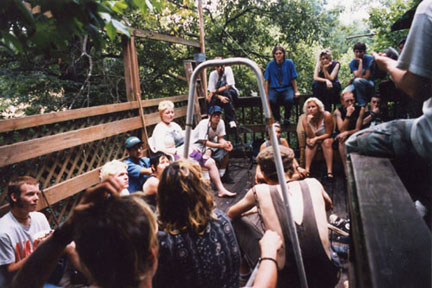 Process is the key to revolutionary change. This is not a new message. Visionaries have long pointed to this but it is a hard lesson to learn. As recently as the 70s, feminists clearly defined the lack of an alternative process for decisionmaking and group interaction as the single most important obstacle in the way of real change, both within progressive organizations and for society at large. Despite progress on many issues of concern to progressive-minded people, very little has changed in the way people treat each other, either locally or globally, and almost nothing has changed about who makes the decisions. The values of competition, which allow us to accept the idea that somebody has to lose; the structure of hierarchy, which, by definition, creates power elites; and the techniques of domination and control, which dehumanizes and alienates all parties affected by their use, are the standards of group interaction with which we were all conditioned. There are but a few models in our society which offer an alternative.
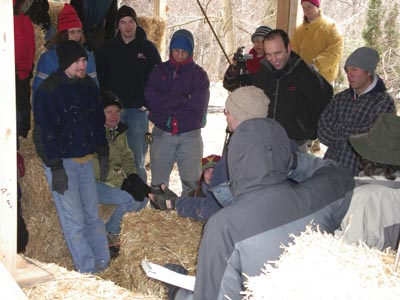
 All groups, no matter what their mission or political philosophy, use some form of process to accomplish their work. Almost all groups, no matter where they fall on the social, political, and economic spectrum of society, have a hierarchical structure, accept competition as “natural”, acceptable, and even desirable, and put a good deal of effort into maintaining control of their members. It is telling that in our society, there are opposing groups, with very different perspectives and values, which have identical structures and techniques for interaction and decisionmaking. If you played a theater game in which both groups wore the same costumes and masks and spoke in gibberish rather than words, a spectator would not be able to tell them apart.
 So what would an alternative revolutionary decisionmaking process look like, you ask? To begin with, a fundamental shift from competition to cooperation. This does not mean to do away with competition. Ask any team coach what the key to victory is and you will be told “cooperation within the team”. The fundamental shift is the use of competition not to win, which is just a polite way of saying to dominate, to beat, to destroy, to kill the opposition; but rather, to use competition to do or be the best. In addition, the cooperative spirit recognizes that it is not necessary to attack another’s efforts in order to do your best; in fact, the opposite is true. In most situations, helping others do their best actually increases your ability to do better. And in group interactions, the cooperative spirit actually allows the group’s best to be better than the sum of its parts.
 Cooperation is more than “live and let live”. It is making an effort to understand another’s point of view. It is incorporating another’s perspective with your own so that a new perspective emerges. It is suspending disbelief, even if only temporarily, so you can see the gem of truth in ideas other than your own. It is a process of creativity, synthesis, and open-mindedness which leads to trust-building, better communication and understanding, and ultimately, a stronger, healthier, more successful group.
The next step is the development of an organization which is non-hierarchical or egalitarian. A corresponding structure would include: participatory democracy, routine universal skill-building and information sharing, rotation of leadership roles, frequent evaluations, and, perhaps most importantly, equal access to power. Hierarchical structures are not, in and of themselves, the problem. But their use concentrates power at the top and, invariably, the top becomes less and less accessible to the people at the bottom, who are usually most affected by the decisions made by those at the top. Within groups (and within society itself), there becomes a power elite. In an egalitarian structure, everyone has access to power and every position of power is accountable to everyone. This does not mean that there are no leaders. But the leaders actively share skills and information. They recognize that leadership is a role empowered by the entire group, not a personal characteristic. A group in which most or all of the members can fill any of the leadership roles cannot easily be dominated, internally or externally.
The last and most visible step towards revolutionary change in group process is the manner in which members of the group interact with each other. Dominating attitudes and controlling behavior would not be tolerated. People would show respect and expect to be shown respect. Everyone would be doing their personal best to help the group reach decisions which are in the best interest of the group. There would be no posturing and taking sides. Conflicts would be seen as an opportunity for growth, expanding people’s thinking, sharing new information, and developing new solutions which include everyone’s perspectives. The group would create an environment where everyone was encouraged to participate, conflict was freely expressed, and resolutions were in the best interest of everyone involved. Indubitably, this would be revolutionary.
You can contact C.T. Butler at:
Food Not Bombs Publishing
7304 Carroll Ave #136
Takoma Park, MD 20912
website: www.consensus.net
Telephone: 1-800-569-4054
Order copies of his books, On Conflict & Consensus and Consensus for Cities on the above site. His book, Food Not Bombs: How to Feed the Hungry and Build Community, is available on Amazon.com.
Please join our Hippie Chick Diaries fan page on Facebook!
Help Spread Consensus Decision-Making Through Indymedia and the World Social Forum in Dakar, Senegal
***PRESS RELEASE***PLEASE CIRCULATE***
The opportunity of a lifetime is before me. I’m writing for support of a project to train members of media cooperatives and collectives around the world in consensus decision-making and community building.
Consensus author/trainer C.T. Lawrence Butler and I have been working with organizers to structure an event leading up to 2011’s World Social Forum in Dakar, Senegal. The event is called the Indy Media Convergence, a two-week period when members of Independent Media Center, aka Indymedia or IMC, gather to create consensus-based community and learn new skills in communication, media and journalism. Afterwards, the members remain in Dakar to cover the World Social Forum, from perspectives free of corporate interests.
 Activist C.T. Lawrence Butler is co-founder of Food Not Bombs, the international network of local organizations feeding homeless and redistributing edible food that would otherwise go to waste. Local Food Not Bombs groups operate by consensus, and C.T. has led workshops in the US, Europe and Africa, showing thousands that horizontal structure is possible. He’s the author of the definitive On Conflict and Consensus, as well as Consensus for Cities and Food Not Bombs. He has been arrested over fifty times protesting war, nuclear power and exercising his right to give away food.
 I, Wren Tuatha, am a writer/filmmaker/facilitator who has lived and practiced consensus decision-making at Heathcote Community for fifteen years. I’m Artist-in-Residence there, and am currently writing a book, Consensus for Kids, based on twenty-five years in alternative education and seven years designing and facilitating Heathcote’s Open Classroom. I am a facilitator/consultant to Intentional Communities, helping established and forming communities prioritize what I call “social technologies”—consensus, conflict resolution, ZEGG Forum, etc. My website, HippieChickDiaries.com, is a first person account of life in Intentional Community, or, as I like to put it, “Wren Tuatha’s complicated adventures in simple living….”
 IMC is a network of collectives, established in 1999 around the anti-WTO protests in Seattle. Going to Dakar, IMC will be covering the World Social Forum, a series of events in answer to the capitalist World Economic Forum. IMC organizers are committed to members learning interpersonal communication and inclusive decision-making, as well as practical media skills, such as building radios and transmitters.
To organizers, the point is really the process. “If we don’t have consensus training, then it’s just a technical workshop,” says Sphinx, a documentary filmmaker and IMC organizer from Cameroon, now living in exile in the US. Indymedia’s mission incorporates consensus principles but many of the over 200 chapters need training.
During the 2011 Convergence, over 100 Africans, as well as members from South America, the US and Europe will experience consensus, as well as Open Space Technology, and possibly ZEGG Forum, an often emotional group process in which communities and their members view and get past some blocks that may interfere with their common work. We will also facilitate cultural sensitivity work to help the diverse community come together through understanding.
Now that our organizing structure has been adopted by the group, we need funding to make the trip. We need to raise $11000 for our consensus work in Dakar.
DESCRIPTION AMOUNT
WSF reg & on ground expenses, CT & WT 1000
airfare for CT & WT 5000
CT home expenses 1500
WT home expenses 1500
100 copies of On Conflict and Consensus 1500
emergencies & miscellaneous 500
11000
I became acquainted with GEO’s Michael Johnson through several ZEGG Forum facilitator trainings at Ganas Community. And I’m excited that he and I are beginning to collaborate in helping worker-owned cooperatives continually develop their social technology skills, so that existing horizontal structures don’t have to revert to hierarchy, and so that all members can share power and be heard in decision-making. This breeds a profound sense of community, and streamlined energy to act on and realize our dreams.
IMC organizers like Sphinx want to use the consensus community at the Convergence to inspire participants to go home and create a handful of sustained, working models of consensus in Africa.
Through my site and networking, I’ve advanced my goals of putting Intentional Community on everyone’s list of “top ten ways to go green,” and helping communities, landed, work or affinity based, to realize that social technologies—the ability to make decisions that include every member’s buy-in, skills at arriving beyond conflict by listening and understanding the other, not just delivering one’s own point—are as important to a community’s success as having the greenest building idea or innovative Permaculture garden design.
An upcoming book C.T. and I are working on develops this idea. Often people tell us that they tried consensus or saw it in action somewhere and they decided that it was too slow or didn’t really work. We agree that consensus done poorly looks just like that, and it isn’t satisfying or effective. We observe that people try to apply the basic concepts of consensus but have problems if they are neglectful or unaware of what we are coming to call the body and the soul of consensus.
When I was in film school, instructors would admonish us to learn the rules first, then feel free to break them. In the same way, consensus has a specific structure, or “body,” that should be learned, not because rules are rules, but because getting them deeply will inform your choices when you go to improvise. We see well-meaning activists who are quick to shed the saddle but then don’t know how to ride the horse.
Also, horizontal structures such as consensus are true paradigm shifts, not just changing Robert’s Rules of Order for Butler’s. Over time practitioners shed old habits, assumptions and attachments and form new curiosities, learning to trust the group. But in the meantime, consensus decision-making with members who are still trying to debate or practice old styles of leadership can be hard. We think of the paradigm shift individuals and groups go through as the “soul” of consensus.
So, as you might imagine, it is hugely important to the Dakar Indy Media Convergence that the architects of the “body” be there to help community members discover the “soul” of their community’s process.
What can you or your organization contribute? We are asking for donations totaling $11,000 to fund our travel and facilitation efforts, as well as providing students with books. We plan to blog daily from the Convergence and the WSF, as connectivity allows.
If you should wish your contribution to be tax deductible, we can work through Indymedia’s finance committee, a non-profit.
Please contact Wren Tuatha, curiocoast@comcast.net, 410-458-2310 or C.T. Butler, ctbutler@together.net, 301-586-2560 for details.
Thank you so much for partnering with us in this work that can help all groups deepen the difference they’re trying to make in the world.
Wren, Heathcote Community, November 11, 2010
Hot Tub Tribe
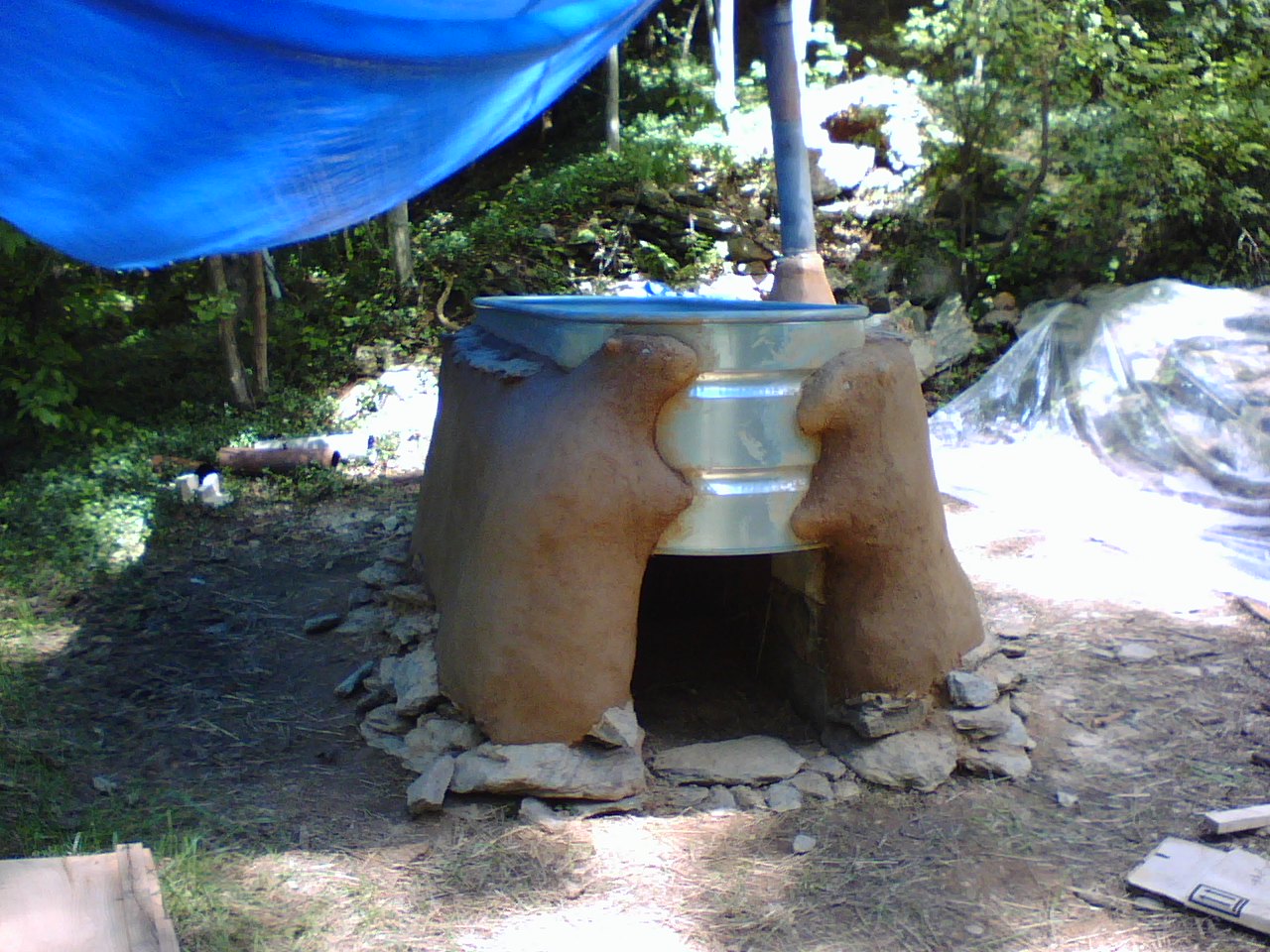 After weeks of working long hours at the fairs, I got to reconnect with my tribe in a sweet way at last night’s hot tub party!
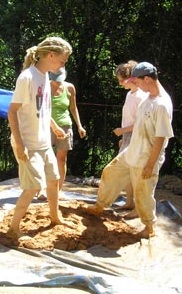
Our wood fired cob hot tub, with two beaver profiles sculpted at the firing end, was made as part of a workshop. Gotta love education at Heathcote! I have other workshop ideas, like How to Give Wren a Much-Deserved Massage, and Preparing and Serving All of Wren’s Favorite Comfort Foods for Maximum Consumption Before She Passes Out in Bliss… I strongly feel that education should be kept relevant.
Heathcote Community members have been engaged all weekend in a retreat lead by students in Laird Schaub and Ma’ikwe Ludwig’s two year facilitation course. We are tackling the question of how to support our education programs while also maintaining Heathcote as a relaxing, safe home for our residential members.
Our regular hot tub parties are a shiny way to pamper ourselves and deepen our shared quality of life. Last night, Paul tended the fire for several hours until the water temperature was just right. We arrived in waves and soaked five at a time, making jokes about the lobster not knowing it’s boiling alive. The kids were in and out, one teenage host served brownies, judging herself harshly on the results of her baking. Nick arrived with his guitar and the chords of The White Album started wafting up with the campfire smoke.
In the deep darkness, while the moon was still tangled in the trees, I could only see my tribe members in silhouette. I noticed that I wanted to take some photographs but I knew my cameraphone wouldn’t have done those silhouettes justice. While I was aside cooling off, I couldn’t quite hear what people were discussing. They could have been any community, at any time in history. A fire, a soak, some music, the woods, we were every tribe while we were being ourselves.
We chatted. We sweated. We hydrated. We rotated in and out of the hot tub and left in waves, as we had come.
And now, the next morning, it is time for me to return to the retreat meetings, the head space and this specific moment.
Community as a Vehicle for Healing: Let the Patient Drive
 I woke up in the Heathcote Mill Conference Center, lying on a couch in a ring of couches, a beach sized towel over me. Sunshine and cool, post-rain air came in windows on three sides.
I was staring at the blackboard, with the previous night’s business meeting agenda on it, and a easel with a large pad on it, opened to a list of visitor weekend work day projects and the names of volunteer supervisors. I had been the facilitator last night and I briefly felt echoes of the dramas, connections and over-extendedness that strangers might or might not guess, looking at the chalk and marker words.
I moved my sleepy attention to the ceiling, pondering the plaster sun face sculpture there, with the hematite third eye. When Patty and the other volunteers had painted the Conference Center recently (oh, how it had needed it) they lovingly painted around the sculpture, great job.
I heard Charles and Patty talking downstairs in the Mill kitchen. I heard the intern Kat singing there. Someone came into the room and sat at the table behind my couch, eating an apple, booting up a computer. It was Kwame, an intern from Ghana.
Patty came to check on me, just as I was sitting up and drinking more mint tea. No, no stomach pain at all! I feel wiped out, but much better! She smiled widely and clasped her hands together. “I’ve been there, I know how that feels, that was a real emergency!” She let me know she’d be in the Farmhouse if I needed anything.
At Heathcote we’ve had several casual discussions about how each of us likes to be dealt with when we’re ill. It ranges from baby me to don’t even knock on my door. I’m nearer the baby me end of the spectrum, because I’m likely to shut down, fail to hydrate and pick crazy solutions, like that infamous epecac syrup caper years ago. And I find it comforting to know someone is there when I don’t feel well.
I had had a bad reaction to a cocktail of six medications, vitamins, mostly. When I get sick, I get stupid. The logic center of my brain (not a frequently visited location anyway, some would say) shuts down.
I had taken my cocktail with breakfast and prescription prilosec, given to head off stomach upset, and I continued with my day. I was weak but I arrived at the Carriage House and plodded through filling ten freezer bags with the dry ingredients of the vegetarian dog food we make. Before I loaded up on peanut butter and TVP, I needed to sit down.
I joined Betsy in the sitting area of the Mill kitchen and we chatted. I complained that I was starting to feel stomach upset and we commiserated about the limitations and Frankenstein mentality of mainstream Western healthcare. Bob came in for coffee. I asked him to put enough water in the teapot for me to get some mint tea for my stomach. Betsy suggested ginger, but I’d warded off the upset with mint the previous night, so I stuck with that.
But two sips into my tea, it was time to lie down. The gluten-free crackers I’d tried while scooping dog food hadn’t worked and the tea was coming too late. I was crashing.
I was having sweats and shakes, and severe stomach cramps. Betsy brought the cool rag I asked for and I tried to relax enough to sit up again and get more tea.
Nick happened through, making a phone call. He asked if I needed anything. I was beyond being able to relax. I had him call the doctor. The physician’s assistant on the phone said that I could come into the clinic and just live through it, because there isn’t much they could do for me, or I could just live through it at home. She didn’t think I needed to go to the emergency room.
Considering that Western medicine had gotten me where I was, I was ready to cut that cord and let my body work it out at home.
Do you want reiki? Patty asked from the quiet room. My yes overlapped her question and then her hands were above my abdomen. By this time, I was tensed with pain and my breathing was stressed, making my tensing worse. Kat was willing to breathe with me and hold my hand.
As I breathed in healing and groaned out pain and stress, my body got clear that we wanted to expel something, one way or another. So Patty and Kat helped me upstairs to the bathroom. By the time I got there, I was too tired to sit on the toilet, so I lied down on the cool concrete floor. It was summer at Heathcote, so the tie-dyed sundress was all that I was wearing. I didn’t care that it bunched up around my waist as I rocked on the floor. I was among women in a bathroom. I just worked on relaxing.
Then the healing purge came. I made it to the toilet and Patty held my locks back while I vomited. She had the cool rag on hand and I appreciated being able to wipe my face as soon as I was done.
All along the way, my community mates let me ask for what I needed and be in charge of my healing. I agreed with the suggestion that I lie on the couch and once I was there, my extremities were cool and tingly. They found an over-sized towel that was just enough, and brought me my tea from downstairs.  Patty joked about our “checkin.” She and I were supposed to meet to process a delicate matter over lunch. Oh yeah, our big, dramatic checkin. I guess we had a different one, I answered. I drifted off to sleep for an hour or so, waking to the late afternoon sounds of Heathcote at work.
And the sunshiny room, and the chalkboard agenda, the circle of couches, and a cup of cold mint tea, sitting safely in the middle of a wooden folding chair, waiting for me. I woke up feeling weak but pain free, and loving my community that was willing to be a vehicle of my healing, and willing to let me drive.
No Intentional Community can be a substitute for trained healthcare practitioners, nor can an Intentional Community take on all illnesses. I regularly meet people who hope living in Community will magically heal their mental illness or provide them with the caregiving they need for some chronic condition or disability. Honestly, it’s case by case, and the seeker should be transparent and up front about what s/he is asking a Community to take on. The answer may be yes, and it may be no.
But being in Community, and falling ill, as we all do sometimes, I feel so blessed and held, not pampered or nursed in a passive way, but honored as the driver of my own body. My mates provided a safe container for me to operate.
As I sit today, weak but researching alternative solutions to my lingering health issue, I reflect that the support and empowerment I got are more reasons that Intentional Community is more sustainable than the isolated, Western lifestyle that surrounds me. If I lived there, I wouldn’t know my neighbors and I wouldn’t have been in common space when I got ill. I would have had to live through it, as the physician’s assistant said, alone.
—WT
Please join our Hippie Chick Diaries fan page on Facebook!
Steppin’ Out and Bringin’ Home the Music: Lea Jones, Carole King, James Taylor, The Beatles and Me!

Something was missing. I felt a restlessness in The Force. I had heaps of work to do but no zen to go with it. So when I saw Lea Jones‘ post on Facebook advertising his performance at One World Coffee House in Columbia, it clicked: Life in a rural Intentional Community can be ironically isolating. I needed a musical distraction!
Lea Jones’ band, Swing States Road Show, had appeared at Heathcote Community as part of our house concert series. So I knew I was in for some great covers, originals and spot-on harmonies. It was fun to catch up with Lea, who has added drummer Steve Raskin and horn player Seth Kibel to his band. Singers Judith Geller and Stuart Rodes and bassist John Seay, of Jones’ now defunct Swings States Road Show were aboard as well. The full sound was great, especially Seth Kibel’s passionate clarinet solos! “It’s great when the audience jumps in and claps for the solos, without a lot of prodding from the bandleader,” Lea quipped.
It was great to get out and discover this intimate venue, One World Coffee House, which is put on by the Unitarian-Universalist Congregation of Columbia, Maryland, and held at the Owen Brown Interfaith Center.
One of many highlights was the tight vocal harmonies on Holly Near’s Mountain Song. It took me back to my Kentucky roots, not fighting coal, but fighting for LGBT rights on Louisville’s Fairness Campaign. Our nationally known local band Yer Girlfriend also did a haunting, rousing version of Mountain Song, now seared into my own story.
 Lea has a new CD, Contact Information, which is actually a remastered double album of his previous releases, Against the Wall and Feels Like Love to Me, the two being “an unintendedly orbital musical reflection on love, co-dependency, pop culture spirit and community.” Cheers for the cardboard cover, in addition to the tunes, which range from troubadour with guitar to polished studio tunes, catchy and ripe for radio.
At the intermission, Lea’s fourteen year-old son Will came around selling CD’s. Lea rightly refers to Will as his “business manager,” as he strategically priced his wares. Artist and business manager had a quick eye conversation over what I should pay. My companion C.T. Butler and I had to laugh, because I play that role at C.T’s consensus workshops, selling his books at full price. C.T. himself has a habit of slashing prices without being asked.
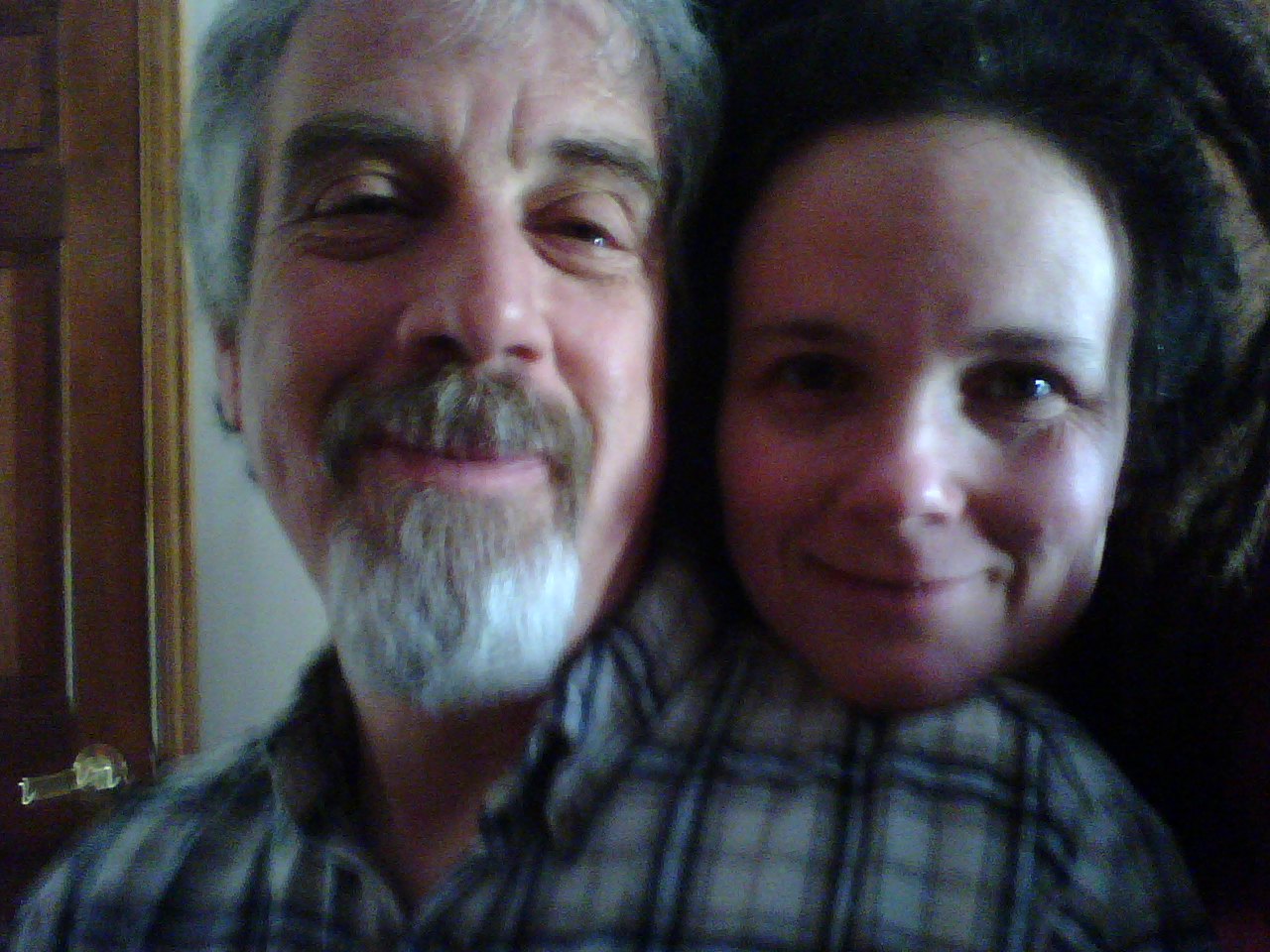 After a night of thoughtful, rocking musicality, C.T. and I managed to find a restaurant still open, Hunan Manor. The vegetarian options were many. I picked the sweet, C.T. got the savory and they were both excellent and twice as much as we could eat. We enjoyed them at lunch the next day as we whittled away at our business plan for Hippie Chick Diaries. Now it’s C.T.’s turn to be my business manager! Why is it so much easier to play that role for another than ourselves?
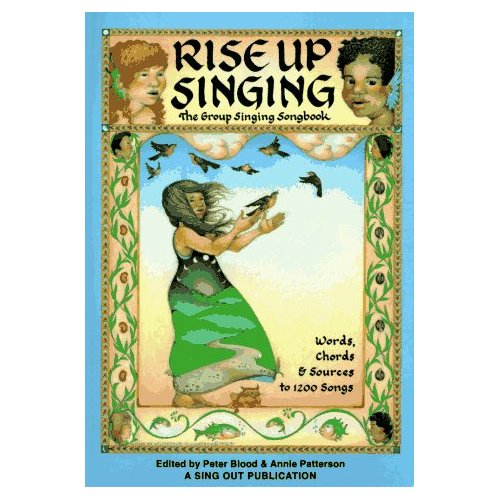 After a day of discussions, we joined the Heathcoters for community dinner. Then several community mates climbed the steep hill to my homestead, Hina Hanta, for more music, a sing along! We were hoping to have Heathcoters Paul Phillips and Nick Corso to bless us with guitar and banjo respectively. But life and motorcycle repairs got in the way. All good. Heathcoter Charles Curtiss, formerly a professional rock drummer, played guitar for us as we called out song after song from the Rise Up Singing Songbook, including some C.T. and I had heard Lea do the night before—Mountain Song (Holly Near), When I’m Gone (Phil Ochs), The L&N Don’t Stop Here Anymore (Than Hall via Jean Ritchie). Some paged through, discovering a memory or two on the next page, others had a song or artist in mind and dove through the indexes. We crooned to
- The Beatles—Blackbird, In My Life, Let It Be, Octopus’ Garden, Yesterday;
- Jacques Brel—If We Only Have Love;
- John Denver—Annie’s Song, Back Home Again, Rocky Mountain High
- Carole King—Up on the Roof
- Anna McGarrigle—Heart Like a Wheel
- Joni Mitchell—Big Yellow Taxi, Circle Game
- Malvina Reynolds—Little Boxes
- Smokey Robinson—My Girl
- Simon & Garfunkel—The Boxer, Homeward Bound, Sounds of Silence
…and all the ones I can’t remember! What a night. But we weren’t done. John Fox had a very personal musical gift for me.
I love Carole King and James Taylor, both. I have all their albums. Yes, I said albums. I know every word, every solo. Carole, in particular, is just my goddess. I can’t say more.
But with my commitment to simplicity, also known as subsistence, I have never seen my goddess in concert. Ironic for the emcee of Heathcote’s house concert series. But it’s true. As a matter of fact, the only major name concert I’ve been to since adolescence was the Indigo Girls, and I found myself there because the woman I was dating won tickets on the radio.
Any time Carole would tour, I would say to myself, maybe. But when Carole and James announced their Troubadour Reunion Tour, with Danny Kortchmar, Leland Sklar and Russ Kunkel from their original band I said, this time! I watched email updates and built a coalition of Heathcoters ready to go with me. The tour’s NYC dates overlapped with my ZEGG Forum training at Ganas Community in Staten Island! It was fate. Almost.
The email came offering advance tickets. I experienced some momentary disorientation. $175, is that for four tickets? No. Oh. Something must be done about this rampant inflation, really. This is what concert tickets cost?
I was the first of the coalition to bail, then others. “I’ve got YouTube,” I’d explain. A few weeks later, while I still had my boo-boo lip taped down in a stoic position, John came to me and asked how I would feel if he went to the show on one of the DC dates. What could I say? Enjoy!
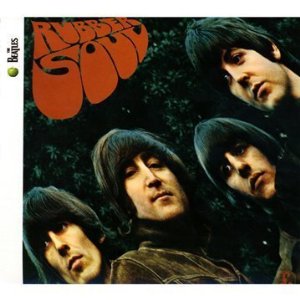 Since then, I’ve indulged in a little musical guilty pleasure, because the price was right and it came in closer-to-eco-friendly cardboard packaging. Between my community and Liberty Village Cohousing where C.T. is staying, there is a 7Eleven. And because I sometimes enter 7Elevens to check out the chips and chocolates I’m not eating, just to monitor the threat, I know that this particular 7Eleven has a rack of Beatles CD’s, all discount priced and in cardboard covers. I want to support cardboard covers whenever I can. And The Beatles never made the wormhole trip from my record collection to my CD collection. Now, after six months of visiting C.T., I have Abbey Road, Let It Be, Revolver, Rubber Soul and Sgt. Pepper’s Lonely Heart’s Club Band. I am so bad.
I often forgo things I don’t need. I like the expression, the best things in life aren’t things. But this left me uneasy. A concert is a community experience, not a trinket or dust collector. Between songs on Saturday night, Lea Jones remarked “You gotta get outta the house sometimes. That’s when things happen. You never get outta the house, nothing ever happens…” I was stunned to hear his simple thought. That’s what had gotten me out of the house and to a front row table that night. I should give myself the gift of more experiences like that.
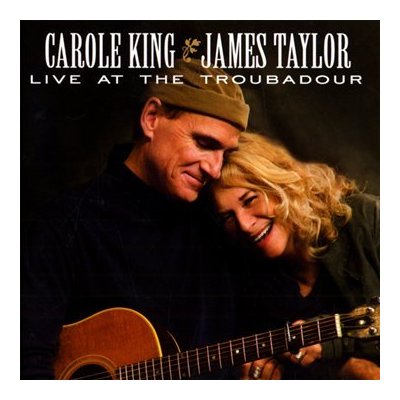 So at my sing along, my buddy John pulled a thing out of his pocket, the Troubador Reunion CD, in a cardboard cover, no less! “Pop ‘er in!” He invited. And at the hour when most Heathcote sing alongs would be winding down, John, C.T. and I sang to the concert DVD!
- Blossom
- So Far Away
- Machine Gun Kelly
- Carolina in My Mind
- It’s Too Late
- Smackwater Jack
- Something in the Way She Moves
- Will You Love Me Tomorrow
- Country Road
- Fire & Rain
- Sweet Baby James
- I Feel the Earth Move
- You’ve Got A Friend
- Up on the Roof
- You Can Close Your Eyes
C.T. was starting to turn into a pumpkin but then he was energized by Fire & Rain. I told the story of learning to waltz to Sweet Baby James so we waltzed and sang.
There were a few surprises that could only come from this double bill. I loved the band bouncing between Carole and James’ very different arrangements of Up on the Roof. It was like a medley with just one song. When I saw that You Can Close Your Eyes was the encore, I scoffed. I protested that they should rock out to Locomotion or something similar. But when Carole stood close to James and harmonized so intimately, it was the perfect close. I should know better that to second guess my goddess!
—WT
Please join our Hippie Chick Diaries fan page on Facebook!